
 English
 Español
 Deutsch
 русский
When you compare quotations for a custom aluminum component, the immediate focus is usually on price per part and tooling cost. The deeper question is whether the supplier can hold your tolerances, surface finish, and structural requirements throughout the entire production run.
Aluminum die casting is the most economical process for producing thousands of complex, lightweight aluminum parts with thin walls, tight dimensional control, and a smooth surface finish. The cycle injects molten metal into a hardened steel die under high pressure, solidifies it in seconds, and repeats with predictable stability. The upfront tooling cost is the trade-off, and it only makes sense when production volume is high enough to amortize it.
How the Aluminum Die Casting Process Works
The aluminum die casting cycle follows a well-defined sequence that repeats with minimal variation across large production runs.
- Die preparation: The two die halves are cleaned, lubricated, and clamped together.
- Injection: Molten aluminum is driven into the die cavity at high pressure, typically 10,000 to 20,000 psi (70 to 140 MPa).
- Holding: Pressure is maintained while the metal solidifies and compensates for shrinkage.
- Ejection: The die opens and the casting is pushed out by ejector pins.
- Trimming: Flash and gating material are removed before the next cycle or before secondary processing.
The entire cycle usually runs between 30 and 90 seconds, depending on part weight and wall thickness. Molten aluminum enters the die at roughly 660 to 700°C. Aluminum is almost always cast on a cold-chamber machine because the shot sleeve and plunger are not permanently submerged in the hot metal. Hot-chamber machines are faster, but their submerged gooseneck would be damaged by aggressive molten aluminum.
| Feature | Hot-Chamber | Cold-Chamber |
|---|---|---|
| Compatible metals | Zinc, some magnesium | Aluminum, copper, magnesium |
| Cycle speed | Faster for small parts | Slower, but suitable for structural parts |
| Die life with aluminum | Not recommended | Long and stable |
| Typical applications | Small precision zinc parts | Automotive, industrial, consumer aluminum components |
Tooling and Mold Design Determine Part Quality
Tooling is the largest initial investment and the most important variable in the aluminum die casting process. A well-designed die is machined from hardened tool steel, typically H13 hot-work steel, and contains water-cooling channels, inserts, slides, and ejector mechanisms. The tooling geometry directly controls wall thickness, draft angle, parting line location, and gate position.
Uneven wall thickness, insufficient draft, and poor gate placement are the design defects that most often cause shrinkage porosity, cold shuts, and out-of-tolerance parts. Cooling channel layout determines cycle time and prevents warping by promoting uniform heat removal. A die set designed for the specific geometry can deliver more than 100,000 shots before it requires rework.
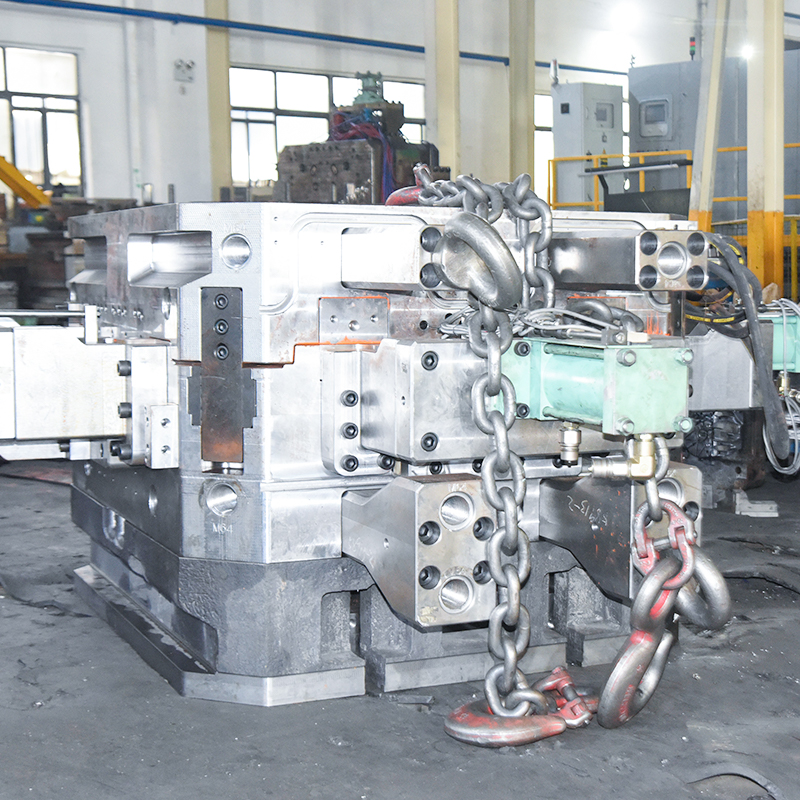 High-pressure aluminum die casting mold manufacturing for custom partsThis mold manufacturing service supports complex geometries and high precision for automotive, appliance, and construction machinery parts. In-house tooling enables faster iteration and full control over process adjustments, reducing lead time and ensuring consistent quality.View Product →
When a supplier builds molds in-house, they can iterate faster during development. That shortens lead time and gives the casting team full control when process adjustments are needed after the first trial.
Mold design and manufacturing have advanced with simulation-driven production development, reducing the need for repeated physical trials during tooling qualification. High-pressure die casting mold design has benefited strongly from this engineering discipline. Tooling style, die steel grade, and gate geometry also determine how quickly a part reaches dimensional stability.
Choosing the Right Aluminum Alloy
The alloy specification drives pressure tightness, machinability, corrosion resistance, and how well the part responds to surface treatments. The three most common aluminum die casting alloys are A380, A383, and A360, each with a distinct strength and finishing profile.
| Alloy | Typical Applications | Key Characteristics |
|---|---|---|
| A380 | Structural parts, housings, brackets | Best all-around machinability and strength-to-weight ratio |
| A383 | Complex thin-wall castings | Improved fillability and hot-crack resistance |
| A360 | Marine, chemical, high-corrosion environments | Superior corrosion resistance and higher elongation |
A380 is the default choice for most structural and general-purpose components because it balances machinability, tensile strength, and castability. A383 is used for parts with fine details or thin sections that would otherwise be difficult to fill. A360 is preferred when the part will be exposed to a corrosive environment or needs better ductility. Selecting the alloy early prevents costly tooling adjustments later because the alloy affects flow behavior, solidification, and the required draft angles.
Process Variations That Solve Specific Quality Challenges
Standard high-pressure die casting handles most aluminum components well, but some designs require modified approaches to achieve specific quality targets.
Vacuum-Assisted High-Pressure Die Casting
A vacuum is drawn from the die cavity before injection to remove trapped air. The result is lower porosity and better pressure tightness, which is critical for hydraulic housings and automotive fluid handling parts. Vacuum-assisted casting adds cost, so it should be reserved for components that require leak tightness or structural soundness under load.
Low-Pressure Die Casting
Gas pressure pushes the molten aluminum upward into the die. The fill is slower and more controlled, producing a cleaner microstructure for large structural components such as wheels or heavy housings. It is also used for parts where oxide inclusions trapped during high-speed filling would be unacceptable.
Semi-Solid Die Casting
A partially solidified metal slurry is injected into the die instead of fully molten metal. This route gives lower porosity and tighter dimensional stability, commonly specified for high-tolerance automotive and electronics housings. It is also a useful option when the design has large thermal mass differences across the part and conventional high-pressure filling would create internal voids.
Secondary Operations: From Casting to Finished Part
Most die castings are not ready to ship immediately after ejection. Draft angles added for demolding leave extra metal, and many functional surfaces require tighter tolerances than the die can naturally hold. Typical secondary operations include CNC milling and turning, drilling and tapping, deburring, trimming, and surface treatment such as anodizing or powder coating.
CNC machining after casting can bring critical areas into the ±0.01 to ±0.05 mm range, which is necessary for bearing seats, mating faces, threaded holes, and alignment surfaces. Machining also removes the skin variation that can affect gasket contact.
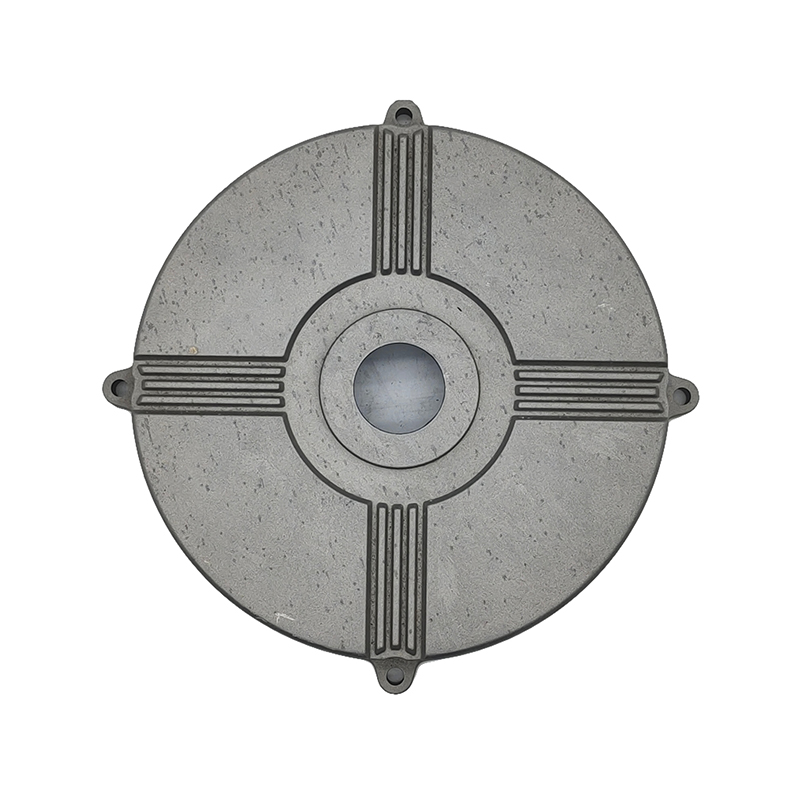 Precision CNC machined aluminum motor housing die castingAfter casting, CNC machining brings critical areas to tight tolerances for bearing seats and rotor alignment. In-house machining streamlines supply chain and lead time, while alloy options like A380 or A360 suit different finishing and corrosion needs.View Product →
A supplier with in-house CNC machining can consolidate the supply chain and shorten total lead time. Motor housings, for example, require precision machining after casting to meet bearing fit and rotor alignment tolerances. Surface finishing options vary by alloy; A380 anodizes well, while A360 is more commonly specified when higher corrosion resistance is the primary requirement before painting or powder coating.
Where Aluminum Die Castings Are Used
Aluminum die castings appear across many industries because the process produces lightweight, rigid, thermally conductive parts at scale.
Automotive and New Energy Vehicles
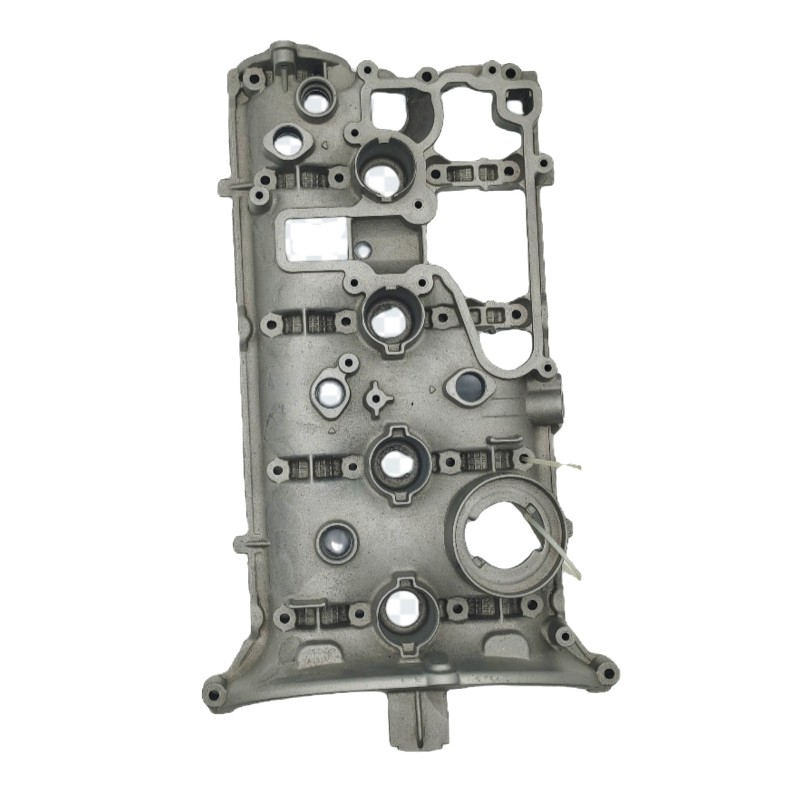
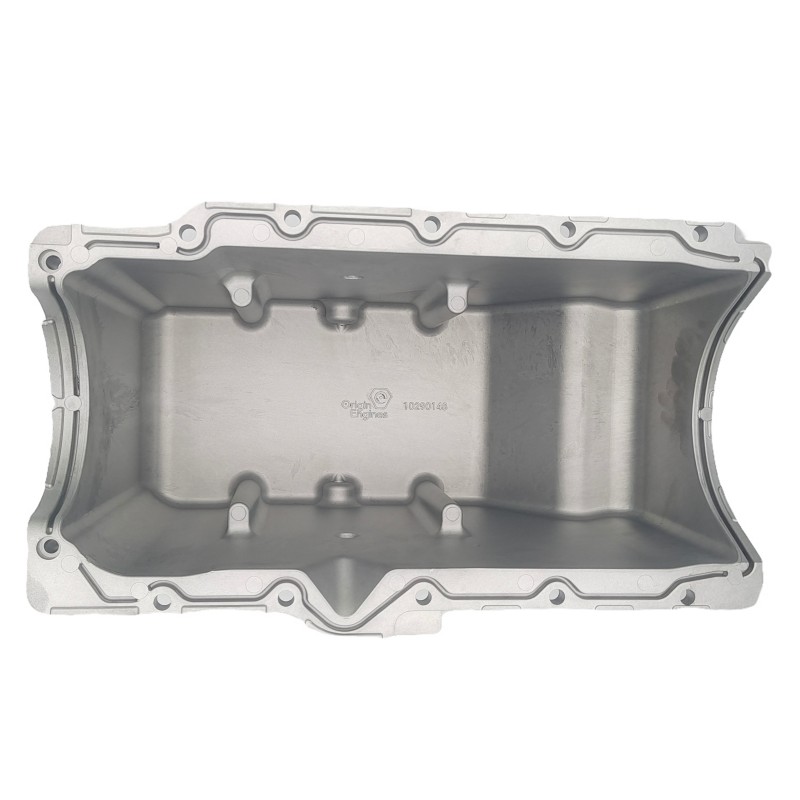
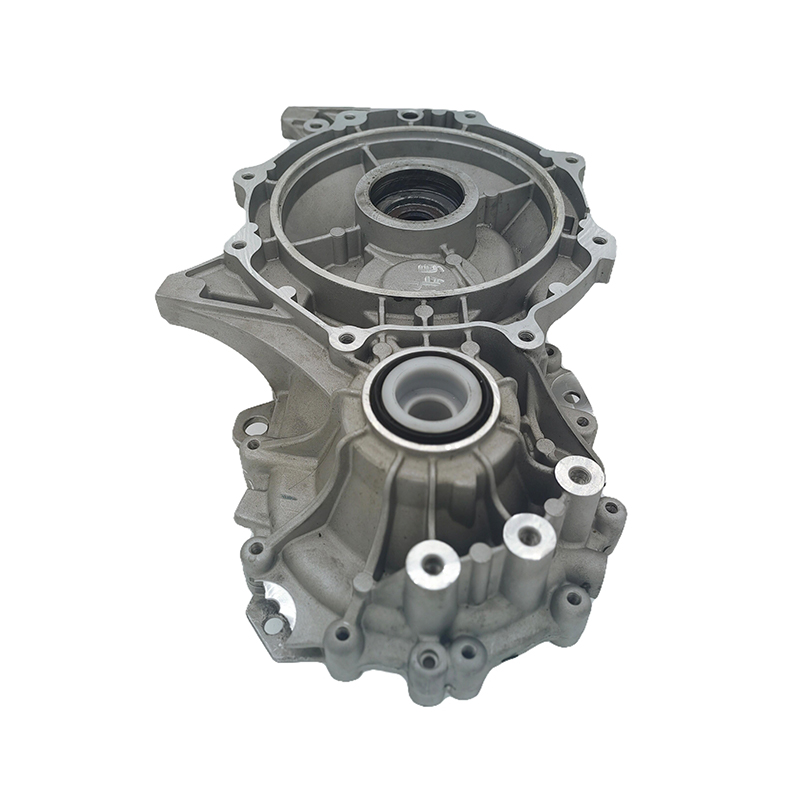
Both combustion and electric vehicles depend on high-pressure aluminum die castings. Engine covers, transmission housings, oil pans, electric drive housings, and electronic control components are produced in large volumes with consistent quality. The push for vehicle lightweighting has made aluminum die castings even more important for EV motor housings and integrated structural components.
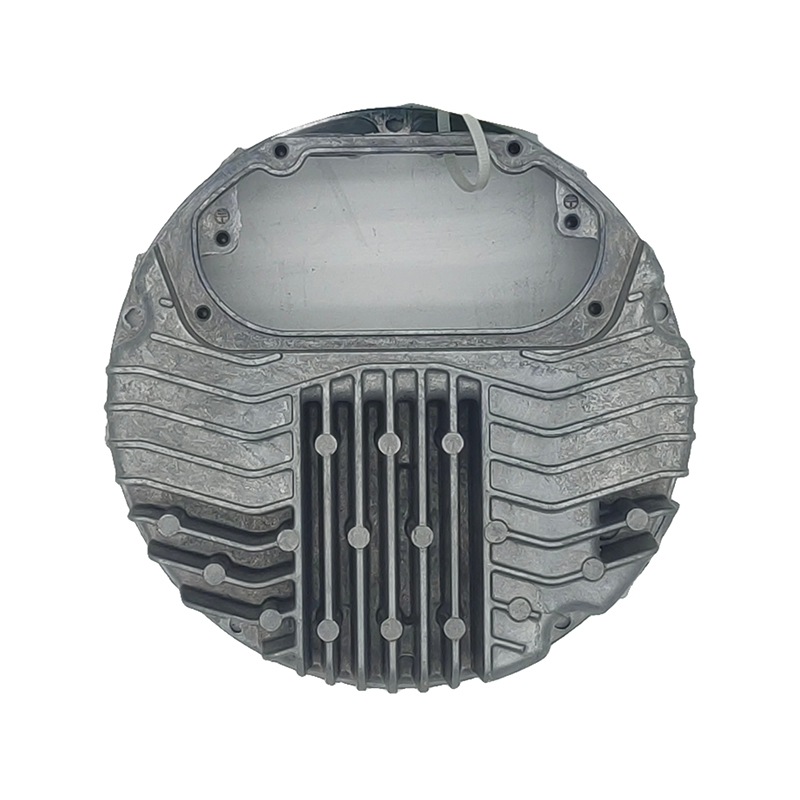
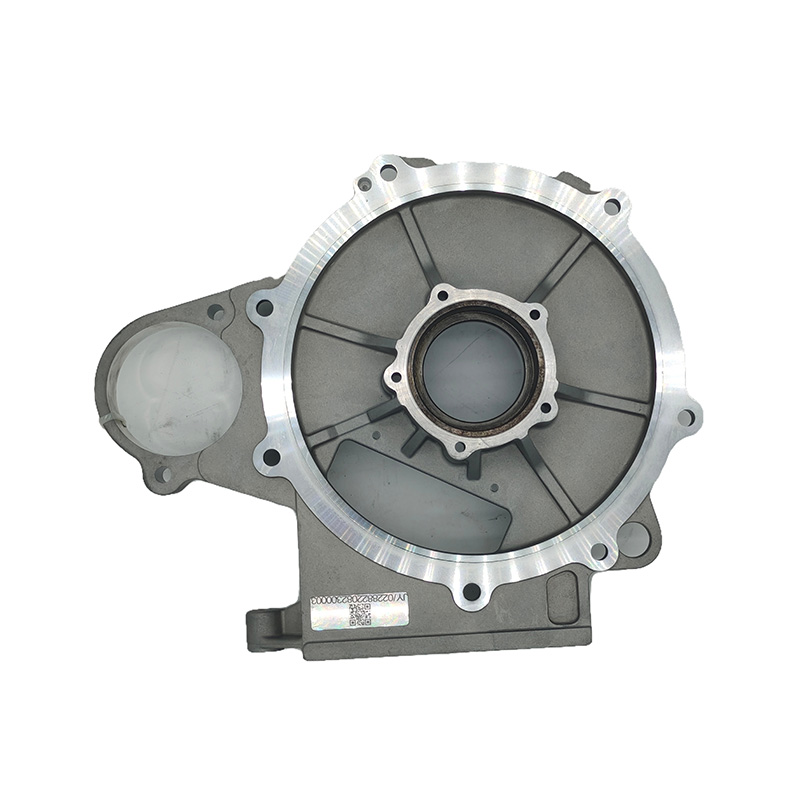 Aluminum alloy electric drive system die casting for vehiclesThese die-cast parts provide lightweight, high-strength structures with excellent heat dissipation for EV motors and control modules. They support efficient transmission and stable operation, critical for extending driving range and preventing overheating.View Product →
For an electric drive system, the casting must combine structural rigidity with heat dissipation from the motor and power electronics. That makes alloy selection and secondary machining decisions directly linked to thermal and mechanical performance.
Communications and Industrial Equipment
Base station housings, radar housings, and signal transmission components are die cast when they need structural rigidity, environmental sealing, and thermal management outdoors. These parts commonly require pressure-tight corners and mounting bosses for electronic assembly, which are both easier to achieve with die casting than with most other processes.
Consumer and Industrial Products
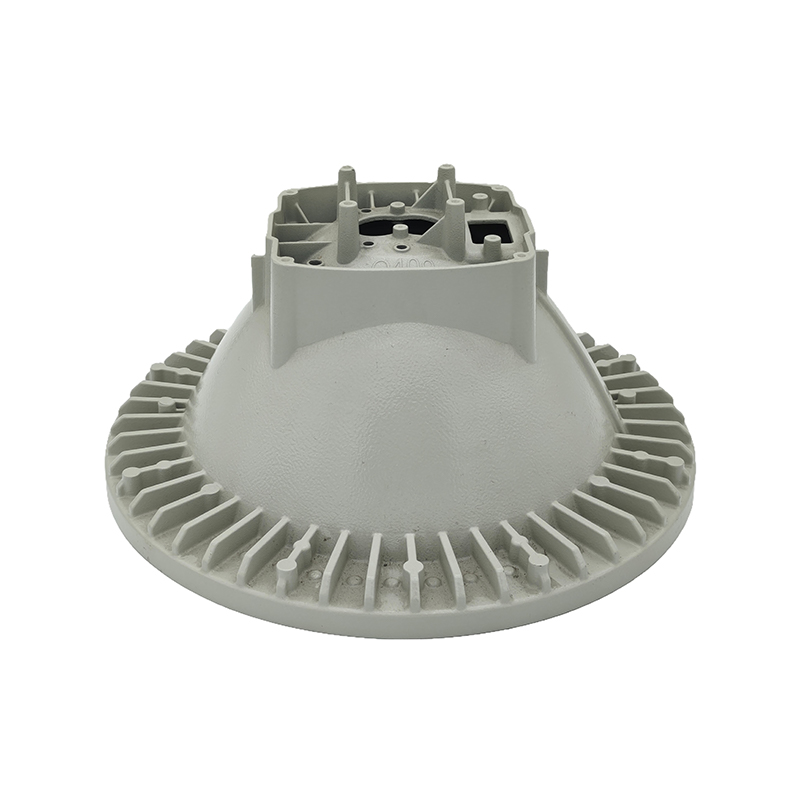
Electric scooter parts, bicycle power-assist motor housings, lighting housings, grill components, and furniture accessories are all manufactured with aluminum die casting. The process supports mounting bosses, heat-sink features, and contoured shapes that would be expensive to machine from solid billet. For example, street lamp housings use aluminum die casting for the heat sink and cable routing geometry.
What to Verify Before Choosing a Die Casting Supplier
Once your shortlist is ready, the evaluation should move beyond the quoted price. A lower unit price does not guarantee a successful component program, especially when tooling and post-processing are involved. The following factors determine whether a supplier can consistently meet your requirements over the life of the contract.
- In-house mold capability: Does the supplier design and build its own dies? In-house tooling shortens qualification time and allows direct control over casting parameters when the first sample fails dimensional inspection.
- Process control: Are injection pressure, alloy temperature, shot speed, and holding time monitored and documented? A consistent process is what separates a reliable supplier from one that produces acceptable parts only by trial and error.
- Quality assurance: Is dimensional inspection data provided? Are material certificates from the aluminum ingot supplier included? For automotive work, ask about PPAP or equivalent qualification documentation.
- Post-processing capacity: Can the supplier provide CNC machining, deburring, and finishing internally or through a qualified partner? Consolidating these steps helps maintain dimensional traceability.
- Industry experience: For automotive or communications components, ask for evidence of similar work, relevant quality records, and a clear understanding of the porosity or leak-tightness limits that apply to your part.
Customized aluminum die casting components for automotive applications require a supplier who can offer dual-track solutions for both ICE and NEV. Total lifecycle cost is often lower when the supplier controls tooling, casting, and post-processing under one roof, because it shortens communication paths and reduces the risk of errors during tool transfer.




 1 Building No.1 No.226. Tiantaishan Road, Daqi street. Beilun District, Ningbo City, Zhejiang Province, China
 +86-15967858563
