
 English
 Español
 Deutsch
 русский
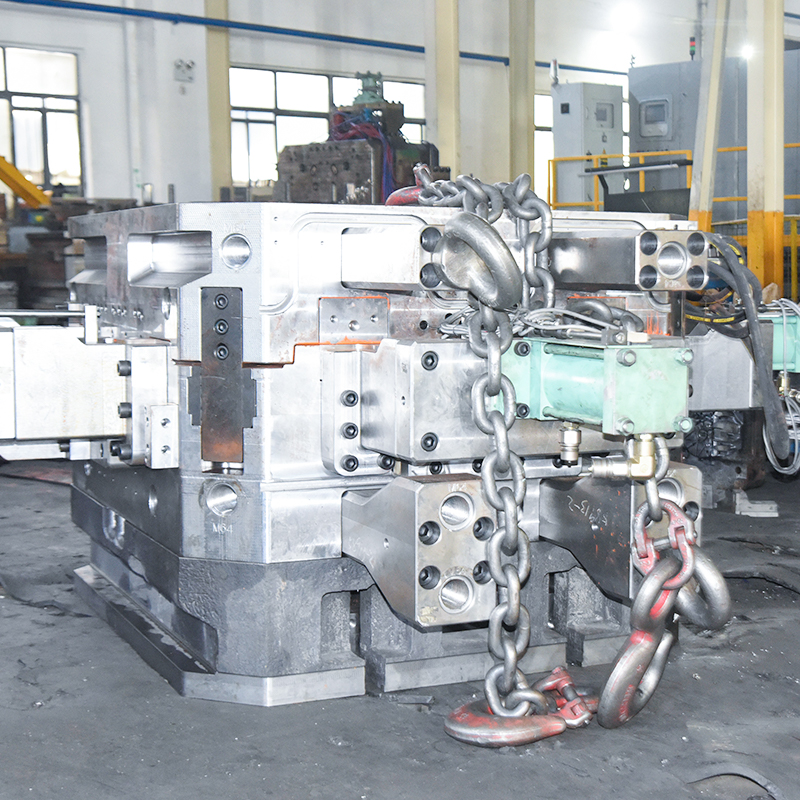
In the realm of modern manufacturing, the High Precision Die Casting Mold is a masterpiece of engineering, designed to produce complex metal parts with sub-millimeter tolerances. However, the most formidable enemy of these expensive assets isn’t mechanical wear, but “Thermal Fatigue”—often colloquially known in workshops as heat checking. When a mold fails prematurely due to thermal cracks, it doesn’t just represent a lost tool; it signifies massive downtime, increased scrap rates, and a significant blow to the production budget.
Understanding the physics behind thermal fatigue is essential for any high-end foundry or toolmaker. It is a phenomenon where the repeated, violent swings in temperature compromise the molecular structure of the tool steel, leading to visible spider-web-like cracks that eventually ruin the surface finish of the cast parts.
Understanding the Root Causes: Why Thermal Fatigue Occurs
Thermal fatigue in a High Precision Die Casting Mold is a cumulative degradation process. To understand why it happens, we must visualize the microscopic “tug-of-war” occurring within the steel during every shot of the die casting cycle.
The Expansion-Contraction Conflict
When molten aluminum (typically around 650°C to 700°C) is injected into the mold under high pressure, the surface of the die (the “skin”) absorbs an immense amount of heat in milliseconds. According to the laws of thermodynamics, this surface layer tries to expand. However, the core of the mold remains at a much lower temperature (around 200°C - 250°C). This core acts as a rigid restraint, preventing the surface from expanding freely. This creates compressive stress that can exceed the yield strength of the steel.
The Impact of Rapid Cooling
The situation reverses once the part is ejected. To prepare for the next shot, the mold is sprayed with water-based lubricants or coolants. This causes the surface temperature to plummet. As the surface tries to contract, the still-warm core now prevents it from shrinking, shifting the stress from compression to tensile stress. It is this relentless cycling—compressive stress followed by tensile stress—that eventually tears the steel’s grain structure apart. In a High Precision Die Casting Mold, where surface integrity is paramount, even the slightest micro-crack can lead to dimensional deviations and rejected parts.
Influence of Injection Pressure and Velocity
High-speed injection adds another layer of complexity. The kinetic energy of the molten metal as it hits the mold surface creates “erosion-assisted fatigue.” If the gate design is not optimized, the turbulent flow can wash away the protective oxide layer of the steel, making it even more vulnerable to thermal shock.
Critical Factors Influencing Mold Longevity
Not all molds are created equal, and several critical variables determine how many thousands of cycles a High Precision Die Casting Mold can survive before the first signs of heat checking appear.
Material Grade and Purity
The choice of tool steel is the foundation of fatigue resistance. Standard H13 steel is common, but for high-precision applications, premium “Extra Fine Structure” (EFS) steels like Dievar, QRO 90, or high-purity SKD61 are preferred. These materials undergo vacuum arc remelting (VAR) to remove impurities that would otherwise act as “stress risers” where cracks can initiate. A mold made from high-purity steel can often withstand 30% to 50% more thermal cycles than one made from standard-grade material.
Heat Treatment Precision
The hardness of the mold is a delicate balance. If the mold is too hard (above 50 HRC), it gains wear resistance but becomes brittle, leading to “catastrophic cracking.” If it is too soft, it will succumb to “washout” and deformation. For a High Precision Die Casting Mold, a specialized vacuum heat treatment followed by multiple tempering cycles is required to achieve a uniform “tempered martensite” structure. This ensures the tool has the “fracture toughness” necessary to absorb thermal shocks without fracturing.
The Cycle Time Dilemma
In high-volume production, there is always pressure to reduce cycle times. However, faster cycles mean the mold has less time to reach thermal equilibrium. This increases the temperature gradient ($\Delta T$) between the surface and the cooling lines. A higher $\Delta T$ translates directly into higher internal stress, exponentially accelerating the onset of thermal fatigue.
Engineering Strategies to Prevent Thermal Fatigue
Preventing thermal fatigue is a multi-dimensional challenge that begins during the initial design phase of the High Precision Die Casting Mold. By using advanced simulation and engineering techniques, we can “pre-empt” the stress points.
Conformal Cooling and Thermal Management
Traditional straight-line cooling holes often leave “dead zones” where heat accumulates. Modern high-precision molds utilize Conformal Cooling, often produced via 3D metal printing (Additive Manufacturing). These channels curve and follow the exact geometry of the mold cavity, maintaining a consistent distance from the surface. This ensures uniform heat extraction and dramatically reduces the internal temperature gradients that drive fatigue.
Optimizing Mold Geometry
Sharp corners are the enemies of precision. They act as stress concentrators where cracks love to start. Engineers designing a High Precision Die Casting Mold must use generous radii and fillets to distribute stresses more evenly. Furthermore, the wall thickness of the die must be carefully calculated to ensure it can withstand the internal pressure without flexing, as mechanical flexing can exacerbate thermal cracks.
Comparison: Impact of Design Variables on Mold Life
| Feature | Low-Cost Standard Mold | High Precision Die Casting Mold | Benefit of Precision |
|---|---|---|---|
| Cooling Method | Straight-drilled lines | Conformal Cooling channels | 40% more uniform heat removal |
| Material Choice | Standard H13 | Premium Dievar / SKD61 (VAR) | Higher hot-yield strength |
| Surface Finish | Basic Polishing | Stress-Relieved Mirror Finish | Fewer initiation points for cracks |
| Heat Treatment | Basic Quench | Multi-stage Vacuum Tempering | Optimal balance of hardness/toughness |
Surface Treatments and Modern Mitigation Techniques
Even with the best steel and design, the surface of a High Precision Die Casting Mold needs an extra layer of defense to survive the harsh environment of a die casting machine.
Nitriding and Diffusion Layers
Nitriding is a process that diffuses nitrogen into the surface of the steel, creating a hard “white layer” and a diffusion zone. This creates a state of compressive residual stress on the surface. Since cracks need tensile stress to grow, the “pre-compressed” surface act as a barrier, forcing the cracks to expend more energy to propagate. For high-precision tools, “gas nitriding” is often preferred for its controllable depth and uniformity.
Advanced PVD Coatings
Physical Vapor Deposition (PVD) coatings like AlTiN (Aluminum Titanium Nitride) or CrN (Chromium Nitride) provide a thermal barrier. These coatings have a lower thermal conductivity than the tool steel itself, meaning they “slow down” the heat transfer into the mold during the injection phase. Additionally, they reduce the soldering effect (where the aluminum sticks to the steel), which is often a precursor to surface damage.
Stress Relieving as a Maintenance Protocol
Thermal fatigue is cumulative. To extend the life of a High Precision Die Casting Mold, many top-tier manufacturers implement a “Stress Relieving” schedule. After a certain number of cycles (e.g., every 10,000 shots), the mold is removed and placed in a furnace for a sub-critical anneal. This “resets” the internal stresses and can effectively double the total lifespan of the tool.
FAQ: Frequently Asked Questions
Q1: What is the first sign of thermal fatigue in a mold?
The first sign is usually “heat checking,” which appears as very fine, hair-like cracks in the corners or hot-spots of the mold cavity. These cracks will eventually transfer onto the cast parts as raised “veins.”
Q2: Does the alloy being cast affect the mold’s thermal fatigue?
Absolutely. Casting aluminum causes more thermal fatigue than zinc because aluminum has a higher melting point and higher latent heat. Magnesium falls somewhere in between but requires very precise temperature control due to its reactive nature.
Q3: Can I repair a High Precision Die Casting Mold that has started to crack?
Small cracks can be polished out if they are shallow. For deeper cracks, specialized laser welding with matching filler wire can be used, but the mold will never be as strong as the original virgin steel and will likely crack again in the same spot.
Q4: How does “Warm-up” prevent fatigue?
Starting a cold mold with molten metal is a recipe for instant cracking. Always pre-heat the mold to its operating temperature (usually 150°C-200°C) using oil heaters or infrared systems to minimize the initial thermal shock.
References & Further Reading
- North American Die Casting Association (NADCA) – “Standard #207: Tool Steel Specification for Die Casting.”
- Journal of Materials Science & Technology – “Mechanisms of Thermal Fatigue in Hot-Work Tool Steels.”
- International Journal of Cast Metals Research – “Optimization of Conformal Cooling in High-Pressure Die Casting.”
- Surface Engineering Journal – “The Role of Nitriding in Extending Die Casting Tool Life.”


 1 Building No.1 No.226. Tiantaishan Road, Daqi street. Beilun District, Ningbo City, Zhejiang Province, China
 +86-15967858563
