
 English
 Español
 Deutsch
 русский
Why is Eliminating Porosity Critical for Communication Housing Die Castings?
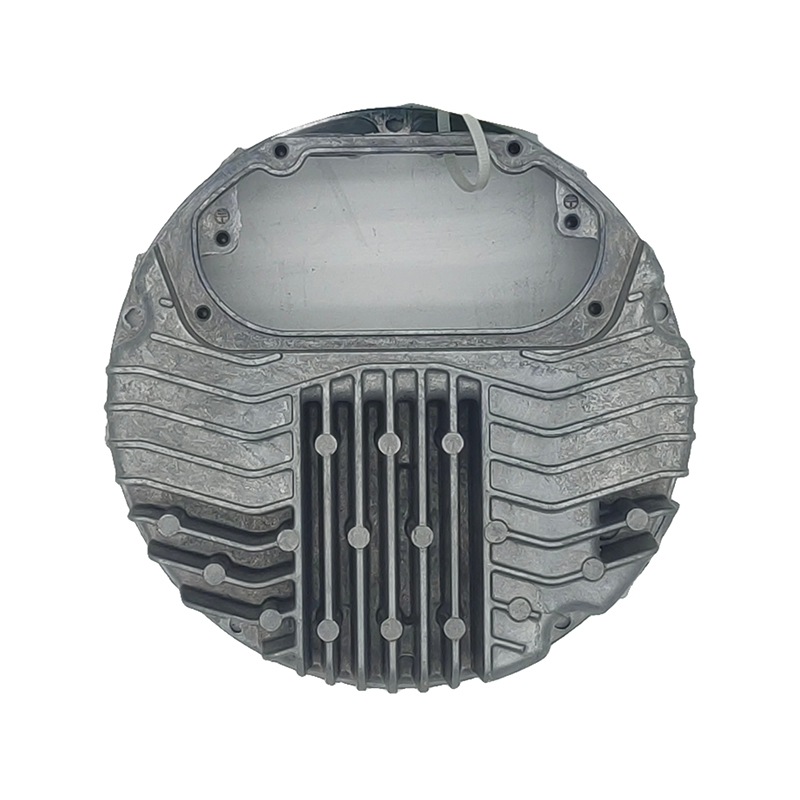
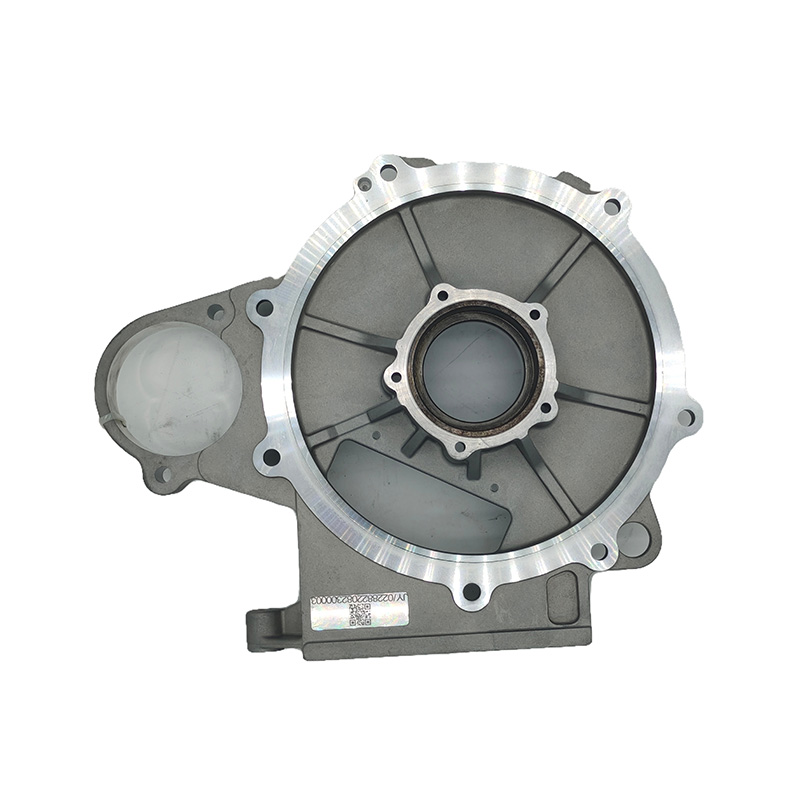
In the telecommunications industry, the integrity of a Communication Housing Die Casting is the foundation of network reliability. Porosity—the presence of tiny voids or holes within the metal—is not merely an aesthetic flaw; it is a structural and functional liability. As we progress through 2026, the global rollout of 5G-Advanced and early 6G research has pushed the power density of Remote Radio Units (RRUs) and Active Antenna Units (AAUs) to new heights. These devices require housings that serve dual purposes: acting as a hermetic seal against harsh environmental conditions (IP67/IP68 ratings) and functioning as a high-performance heat sink.
The Impact on Thermal Management and Signal Integrity
Porosity acts as a thermal insulator. When a die-cast housing contains internal gas pockets, the path of thermal conductivity is interrupted, leading to localized “hot spots” that can degrade the lifespan of sensitive gallium nitride (GaN) power amplifiers. Furthermore, for high-frequency satellite and microwave communications, the housing must provide impeccable electromagnetic interference (EMI) shielding. Large internal voids can disrupt the continuity of the Faraday cage effect, potentially allowing signal leakage that compromises network security and performance. Therefore, achieving a “near-zero porosity” state is essential for maintaining the signal integrity and thermal efficiency demanded by modern telecom infrastructure.
Structural Reliability in Extreme Environments
Communication housings are often installed in high-altitude towers or coastal regions where they are subjected to extreme wind loads and salt spray corrosion. Porosity that reaches the surface can become a focal point for “pitting corrosion.” Once moisture or salt enters these microscopic pores, the structural integrity of the aluminum alloy (typically ADC12 or A380) begins to fail from the inside out. By eliminating these defects, manufacturers ensure that the housing remains robust for its 10-to-15-year service lifecycle, significantly reducing MRO (Maintenance, Repair, and Operations) costs for network operators.
Advanced Vacuum Die Casting: The Gold Standard for Gas Removal
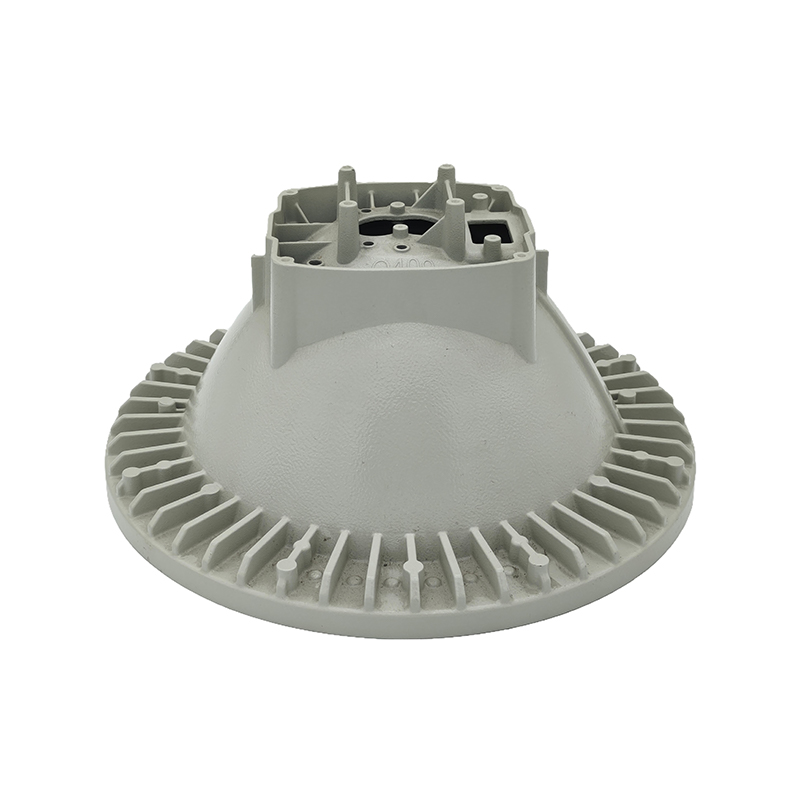
One of the most effective methods to combat gas-induced porosity in precision communication housings is the integration of vacuum-assisted die casting technology. In conventional High-Pressure Die Casting (HPDC), the molten metal is injected into the mold cavity at high velocities, often trapping air and release agents within the turbulent flow. For complex housings with hundreds of thin heat-dissipating fins, this trapped air has nowhere to go, resulting in “blowholes” that compromise the casting’s density.
Enhancing Density with High-Efficiency Vacuum Valves
Vacuum-assisted casting works by evacuating the air from the mold cavity and the shot sleeve before the injection happens. This creates a low-pressure environment that allows the molten aluminum to flow into the most intricate details of the cooling fins without resistance.
- Reduction of Outgassing: Because the vacuum removes the majority of air and moisture, there is significantly less “outgassing” during subsequent heat treatment or powder coating processes. This prevents the formation of surface blisters, which are a common cause of rejection in premium telecom enclosures.
- Improved Mechanical Properties: Vacuum-cast parts exhibit higher elongation and tensile strength because the metal matrix is more homogenous. This is particularly important for housings that require secondary CNC machining or the installation of threaded inserts.
Technical Comparison: Porosity Mitigation Strategies
| Mitigation Strategy | Target Defect | Implementation Complexity | Primary Benefit |
|---|---|---|---|
| Vacuum Assistance | Gas Porosity | High | Excellent surface finish for painting/coating |
| Squeeze Casting | Shrinkage Porosity | Very High | Maximum structural density in thick sections |
| Jet Cooling | Localized Shrinkage | Moderate | Prevents voids in heavy mounting bosses |
| Piston Speed Control | Turbulent Gas | Low | Cost-effective for standard enclosures |
Precision Thermal Management through Advanced Mold Design
While vacuum systems solve gas issues, shrinkage porosity—caused by the contraction of aluminum as it solidifies—requires a sophisticated thermal management strategy. Large-scale communication housings are notoriously difficult to cast because they combine extremely thin cooling fins with thick mounting bases or “bosses.” These thick sections cool much slower than the thin walls, creating “hot spots” where the metal stays liquid longer. As it finally cools, it shrinks, pulling away from the center and creating jagged internal voids.
Implementing High-Pressure Jet Cooling
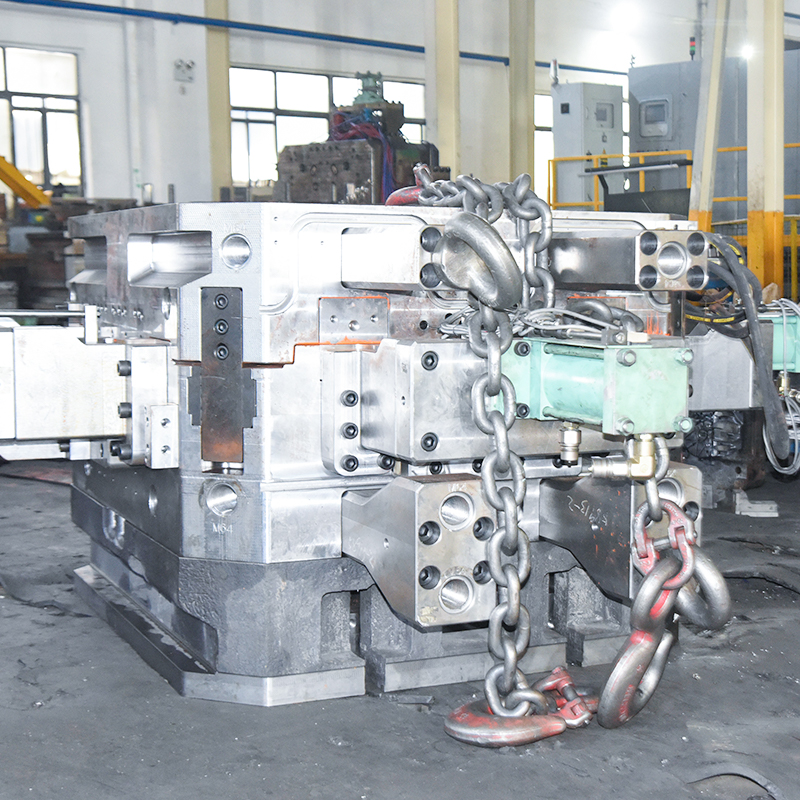
To solve this, modern mold designs incorporate “Jet Cooling” systems. This involves high-pressure water circuits that are timed to cool the thickest parts of the mold precisely when the metal begins to solidify.
- Directional Solidification: The goal is to force the metal to solidify from the furthest points back toward the gate. By keeping a “liquid path” open from the injection piston to the thickest sections, the machine can continue to “feed” more metal into the shrinkage zones, effectively filling the voids before they can form.
- Real-Time Thermal Mapping: In 2026, leading manufacturers use infrared thermal sensors integrated into the die-casting machine. These sensors provide a live “heat map” of the mold surface, allowing the operator to adjust cooling cycles on a per-shot basis to maintain a perfect thermal balance between $200^\circ C$ and $250^\circ C$.
Optimized Gate and Overflow Systems
The design of the runner and overflow system is equally critical. Overflows are secondary pockets designed to “catch” the first, coldest wave of metal and any remaining air. For telecom heat sink housings, placing overflows strategically at the tips of the longest fins ensures that the “final” metal to solidify is of the highest quality. This prevents cold-shut defects and ensures that the most critical areas of the heat sink are completely dense.
Material Purity and Molten Metal Degassing Protocols
The quality of the raw aluminum ingot and the cleanliness of the melt are often overlooked factors in the fight against porosity. Even the best mold and vacuum system cannot fix a metal supply that is contaminated with hydrogen gas or non-metallic inclusions. In the context of Communication Housing Die Castings, material purity is non-negotiable.
The Role of Hydrogen in Gas Porosity
Aluminum has a high affinity for hydrogen, especially in humid environments. When the metal is molten, it absorbs hydrogen; as it solidifies, the solubility of hydrogen drops, and the gas is forced out, creating microscopic “pinhole porosity.”
- Rotary Degassing: To eliminate this, the molten aluminum must undergo a rotary degassing process using inert gases like Nitrogen or Argon. A spinning rotor breaks the gas into tiny bubbles that travel through the melt, picking up hydrogen and carrying it to the surface where it can be skimmed off.
- Hydrogen Measurement: Modern quality labs use Reduced Pressure Tests (RPT) or vacuum density tests to measure the “Gas Level” of the melt before every shift. For high-end 5G equipment, the hydrogen content is typically kept below $0.12 \text{ ml/100g}$.
Strategic Use of ADC12 and High-Fluidity Alloys
The choice of alloy significantly impacts the filling behavior. ADC12 (Al-Si-Cu) is the industry standard for communication housings due to its excellent fluidity and moderate thermal conductivity. However, for specialized applications requiring even better heat dissipation, higher-purity alloys with lower copper content are used. These alloys require even tighter temperature control during the casting process to prevent “dross” formation, which can act as a nucleation point for gas bubbles and further exacerbate porosity issues.
Predictive Simulation: Solving Defects in the Virtual World
In 2026, the industry has moved away from the “trial and error” approach to die casting. Advanced Computer-Aided Engineering (CAE) and flow simulation software, such as Magmasoft, allow engineers to identify and eliminate porosity before the first piece of steel for the mold is even cut.
Virtual Filling and Solidification Analysis
Simulation software models the entire life cycle of a single shot. By inputting the exact parameters of the die-casting machine—piston speed, pressure, and mold temperature—engineers can visualize the “turbulent energy” of the metal as it enters the housing.
- Air Entrapment Prediction: The software highlights areas where air is likely to be trapped between two merging flows of metal (knit lines). This allows designers to move a gate or add a vent to that specific location.
- Porosity Probability Mapping: By analyzing the solidification rate of every cubic millimeter of the communication enclosure, the simulation provides a probability map of shrinkage porosity. This data drives the placement of cooling lines and ensures that the mold is “right the first time.”
Digital Twins and Big Data in the Factory
Leading die-casting facilities now utilize “Digital Twins”—virtual replicas of the actual casting machine. Every shot’s data is recorded and compared against the optimized simulation. If the injection pressure drops or the cycle time changes, the system can predict an increase in porosity risk and alert the quality team to inspect those specific parts. This data-driven approach moves the factory toward a “Zero Defect” philosophy, ensuring that every Communication Housing Die Casting delivered to the customer meets the highest standards of the telecommunications industry.
FAQ: Communication Housing Die Casting Porosity
Can surface porosity be repaired with fillers or welding?
For high-performance communication housings, structural welding or fillers are generally not recommended. These “fixes” can create thermal barriers that impede heat dissipation and may fail under the vibration or thermal cycling common in outdoor base station environments.
Why is aluminum the preferred material for these housings over steel?
Aluminum offers a superior strength-to-weight ratio and significantly higher thermal conductivity ($160 \text{–} 200 \text{ W/m·K}$) compared to steel ($15 \text{–} 50 \text{ W/m·K}$). For large-scale 5G equipment that must be mounted on poles, weight reduction is critical for safety and ease of installation.
How does vacuum casting affect the cost of the housing?
While vacuum-assisted die casting involves a higher initial investment in mold technology and machine setup, it often reduces the total cost of ownership by significantly lowering the scrap rate and reducing the need for secondary surface treatments or impregnations.
Does porosity affect the IP-rating of a communication enclosure?
Yes. If internal porosity connects from the inside to the outside of the casting (known as “connected porosity”), the housing will fail a pressure leak test, and moisture will eventually ingress, damaging the electronics.
References and Further Reading
- NADCA (North American Die Casting Association): “Standard for Porosity and Quality in Aluminum Castings.”
- Journal of Materials Processing Technology: “Vacuum-Assisted HPDC of Large-Scale Thin-Walled Components.”
- IEEE Telecommunications Infrastructure Standards: “Thermal and EMI Requirements for 5G Outdoor Enclosures.”


 1 Building No.1 No.226. Tiantaishan Road, Daqi street. Beilun District, Ningbo City, Zhejiang Province, China
 +86-15967858563
