
 English
 Español
 Deutsch
 русский
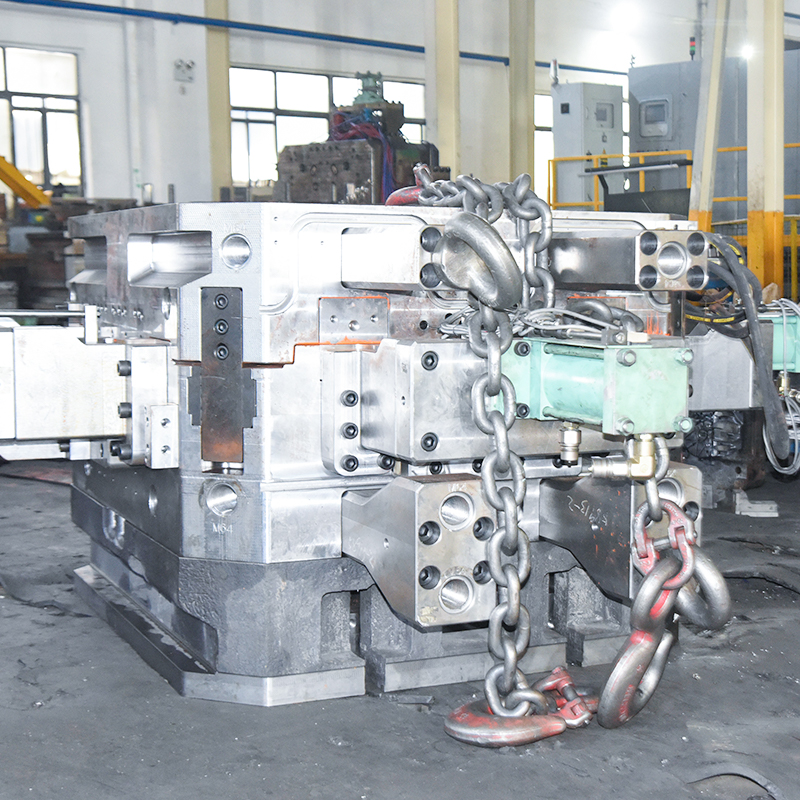
The most widely used materials for die casting mould production are H13, P20, and 8407 tool steels, with H13 chromium hot-work steel accounting for the vast majority of high-pressure die casting moulds worldwide due to its superior resistance to thermal fatigue, high hardness retention, and ability to withstand repeated cycles of extreme heating and cooling. The choice of mould material directly determines tool life, dimensional accuracy, and total production cost, so selecting the right steel grade is one of the most important engineering decisions in any die casting project.
Why Mould Material Selection Matters
Die casting moulds are subjected to repeated thermal cycling, mechanical stress, and erosion from molten metal injected at high pressure and temperature. A poorly chosen material can lead to premature cracking, soldering, or dimensional drift, resulting in costly downtime and part rejection. Industry data shows that mould material alone can account for 60–70% of the tool's total service life performance, making it a far more significant factor than mould design refinements alone.
Three factors typically guide material selection: the casting alloy being used (aluminum, zinc, or magnesium), the expected production volume, and the complexity of the part geometry. Each of these influences how much thermal and mechanical stress the mould will endure over its lifetime.
H13 Tool Steel: The Industry Standard
H13 chromium hot-work die steel is used in an estimated 80–90% of aluminum and zinc die casting moulds globally, making it the default choice for most manufacturers. It offers an excellent balance of toughness, thermal fatigue resistance, and machinability.
Key Properties of H13
- Hardness typically maintained between 44–52 HRC after heat treatment
- Good resistance to heat checking (thermal fatigue cracking) after repeated cycles
- High toughness, reducing the risk of sudden brittle failure
- Withstands operating temperatures up to approximately 600°C
A typical H13 mould used for aluminum die casting can produce between 80,000 and 150,000 shots before requiring major refurbishment, depending on part complexity and cooling system design. This makes it the go-to choice for medium-to-high volume production runs.
P20 Steel: Cost-Effective for Prototyping and Zinc Casting
P20 is a pre-hardened mould steel commonly used for zinc die casting moulds and lower-volume aluminum applications. Because it comes pre-hardened to 30–36 HRC, it requires less post-machining heat treatment, which can reduce mould manufacturing lead time by 15–20% compared to H13.
However, P20's lower hardness and reduced thermal fatigue resistance mean it is not well suited to high-temperature aluminum die casting, where surface temperatures regularly exceed 650°C. It performs well in zinc die casting, where injection temperatures are lower (around 400°C), typically achieving 50,000 to 100,000 shots before significant wear appears.
8407 and Premium Hot-Work Steels for Demanding Applications
For high-volume production or parts with thin walls and complex cores, manufacturers often upgrade to premium hot-work steels such as Uddeholm 8407 or DIEVAR. These steels undergo more rigorous electro-slag remelting (ESR) processes, resulting in a cleaner microstructure with fewer inclusions.
Advantages Over Standard H13
- Improved isotropic toughness, reducing directional weak points
- Higher resistance to thermal fatigue cracking, extending tool life by up to 30% in high-cycle applications
- Better performance in moulds with thin cores and sharp corners, where stress concentration is highest
These premium steels typically cost 20–40% more than standard H13, so they are generally reserved for high-volume automotive or structural component moulds where tool longevity offsets the higher upfront investment.
Comparing the Leading Die Casting Mould Materials
| Material | Typical Hardness | Best For | Estimated Mould Life (Shots) |
|---|---|---|---|
| H13 | 44–52 HRC | Aluminum & zinc die casting | 80,000–150,000 |
| P20 | 30–36 HRC | Zinc casting, prototyping | 50,000–100,000 |
| 8407 / DIEVAR | 46–50 HRC | High-volume, thin-wall, complex parts | 150,000–250,000+ |
| Beryllium Copper Inserts | 30–40 HRC | Localized cooling in hot spots | Varies (insert-dependent) |
Beryllium Copper: Solving Localized Overheating
While not used for the entire mould body, beryllium copper (BeCu) alloys play an important supporting role. They are commonly used as inserts in areas prone to heat concentration, such as thin ribs or deep cores, because BeCu has thermal conductivity roughly 3 to 5 times higher than H13 steel.
By placing BeCu inserts strategically, mould designers can reduce local hot spots, shorten cycle times, and minimize the risk of soldering (metal sticking to the mould surface). This targeted approach is especially valuable in moulds producing thin-walled electronics housings or automotive components with intricate cooling requirements.
Matching Material Choice to Casting Alloy
The metal being cast has a direct influence on which mould steel makes sense. The table below summarizes common pairings used across the industry.
- Aluminum die casting (injection temp ~650–700°C): H13 or premium hot-work steels are strongly recommended due to high thermal stress.
- Zinc die casting (injection temp ~380–420°C): P20 or H13 both perform well, with P20 offering a lower-cost option for shorter runs.
- Magnesium die casting (injection temp ~600–650°C): H13 is preferred, often with additional surface treatments to resist magnesium's corrosive reaction with steel.
Choosing a mismatched material — for example, using P20 for high-volume aluminum casting — is one of the most common causes of premature mould failure, often cutting expected tool life by more than 50%.
Surface Treatments That Extend Mould Life
Regardless of base material, surface treatments significantly improve mould durability. The most common options include:
- Nitriding: increases surface hardness to 900–1100 HV, improving wear and erosion resistance
- PVD coatings (such as TiN or CrN): reduce soldering and improve release of aluminum castings
- Nickel plating: adds a protective barrier, particularly useful for magnesium alloy casting
When combined with a properly selected base steel, these treatments can extend usable mould life by an additional 20–30%, offering strong return on investment for high-volume production programs.
Final Recommendations
For most manufacturers, H13 remains the safest and most cost-effective choice for the majority of die casting mould applications, balancing performance and cost across aluminum and zinc casting. Businesses running short prototype batches or zinc-only production can save on upfront costs with P20, while high-volume automotive or structural part manufacturers should consider premium steels like 8407 or DIEVAR to maximize tool life and reduce long-term per-part costs.
Ultimately, the right material depends on production volume, casting alloy, and part geometry — but understanding these core options equips buyers and engineers to make informed decisions and avoid costly tooling failures.


 1 Building No.1 No.226. Tiantaishan Road, Daqi street. Beilun District, Ningbo City, Zhejiang Province, China
 +86-15967858563
