
 English
 Español
 Deutsch
 русский
How Die Casting Molds Work: The Short Answer
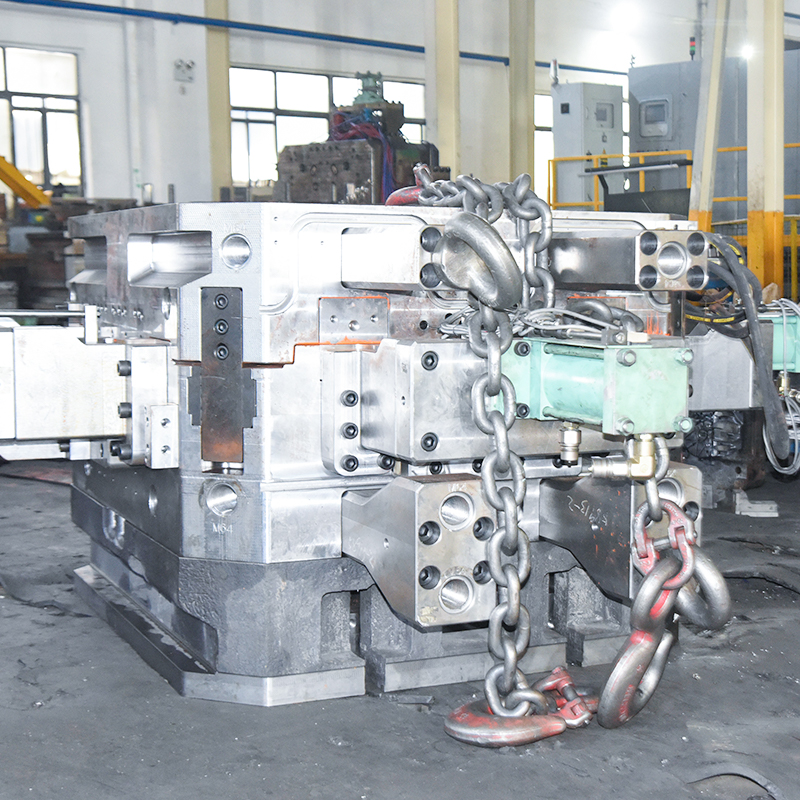
A die casting mold works by containing molten metal within a precisely machined steel cavity under high pressure (often 1,500 to 25,000 psi), forcing the metal to fill every detail of the cavity before it cools and solidifies into the final part shape. The mold, typically made from hardened tool steel such as H13, must withstand thousands of repeated heating and cooling cycles while maintaining dimensional accuracy within fractions of a millimeter.
The mold is the reusable steel tool that gives a die-cast part its shape, and its design, material, and machining precision directly determine part quality, production speed, and how many parts the mold can produce before wearing out.
The Core Structure of a Die Casting Mold
Every die casting mold, regardless of complexity, is built around a few essential structural elements.
Cavity and Core
The cavity forms the outer shape of the part, while the core shapes internal features such as holes or pockets. Together they define the finished geometry when the mold halves close.
Sprue and Runner System
Molten metal enters through the sprue and travels through runners, channels machined into the mold that direct flow toward the cavity while minimizing turbulence and premature cooling.
Gates
Gates control the speed and direction at which metal enters the cavity. Gate size and placement significantly affect fill pattern, and poorly designed gates are a leading cause of defects like cold shuts or porosity.
Venting System
Vents allow trapped air and gases to escape as metal fills the cavity. Without adequate venting, trapped air can cause porosity defects that weaken the finished part.
Ejector System
Once the part solidifies, ejector pins push it out of the mold cavity. Ejector placement must avoid critical surfaces to prevent visible marks or distortion on the finished part.
Cooling Channels
Internal channels circulate water or oil to regulate mold temperature, which directly affects cycle time and part quality. Uneven cooling is one of the most common causes of warping and dimensional inconsistency.
Materials Used in Die Casting Molds
Mold material choice is one of the most important decisions in tooling, since it directly determines how many production cycles the mold can survive and how well it resists thermal fatigue.
| Steel Grade | Typical Use | Key Characteristic |
|---|---|---|
| H13 | Aluminum and zinc die casting | Excellent thermal fatigue resistance |
| SKD61 | High-volume aluminum casting | High hot hardness, common in Asia |
| P20 | Prototype and lower-volume molds | Lower cost, easier to machine |
| DIEVAR | High-stress, long-run production | Superior toughness and crack resistance |
A well-made H13 steel mold can typically produce 100,000 to 300,000 shots for aluminum die casting before requiring major refurbishment, though actual lifespan depends heavily on part complexity, casting alloy, and maintenance practices.
The Die Casting Process, Step by Step
- The two mold halves close and clamp together under high pressure to prevent metal leakage
- Molten metal is injected through the sprue and runner system into the cavity at high velocity
- Pressure is maintained while the metal fills the cavity and displaces air through the vents
- Cooling channels regulate temperature as the metal solidifies within the cavity
- The mold opens and ejector pins push the finished part free of the cavity
- Excess material, such as sprues and flash, is trimmed away in a secondary operation
This entire cycle, from mold closing to part ejection, often takes only a few seconds to under a minute for smaller aluminum or zinc components, which is why die casting is favored for high-volume production runs.
Hot Chamber vs. Cold Chamber Molds
Die casting molds are generally paired with one of two machine types, and the mold design differs accordingly.
Hot Chamber Molds
Used with lower melting-point alloys like zinc and magnesium, hot chamber systems keep the injection mechanism submerged in molten metal, allowing for faster cycle times, often 15 to 20 shots per minute for small parts.
Cold Chamber Molds
Used with higher melting-point alloys like aluminum, cold chamber systems require molten metal to be ladled into a separate injection sleeve for each cycle, resulting in slightly longer cycle times but the ability to handle metals that would corrode a hot chamber's submerged components.
Common Die Casting Mold Defects and Their Causes
Understanding common defects helps clarify why precise mold design and material selection matter so much.
- Porosity: Usually caused by trapped air from inadequate venting or turbulent metal flow through poorly designed gates
- Cold shuts: Occur when metal cools too quickly before fully filling the cavity, often due to gate placement or insufficient injection speed
- Flash: Thin excess metal that escapes along the parting line, typically caused by worn mold surfaces or insufficient clamping force
- Soldering: Molten metal chemically bonding to the mold surface, common when mold temperature runs too high or release agents are applied inconsistently
- Heat checking: Fine surface cracks from repeated thermal cycling, which shortens mold lifespan over thousands of shots
Key Factors That Affect Mold Lifespan and Quality
Several practical factors determine how long a die casting mold will perform reliably and how consistent the resulting parts will be.
- Steel quality and heat treatment: Properly hardened and tempered steel resists thermal fatigue far better than inconsistently treated material
- Cooling system design: Well-placed cooling channels reduce cycle time and prevent uneven thermal stress that leads to cracking
- Casting alloy: Higher melting-point alloys like aluminum place more thermal stress on molds than zinc, generally shortening tool life
- Maintenance routine: Regular cleaning, lubrication, and inspection of wear surfaces can extend mold life significantly beyond neglected tools
- Part geometry complexity: Thin walls, deep cavities, and fine details concentrate stress in specific mold regions, increasing wear in those areas
Getting these factors right at the design and material selection stage is far more cost-effective than repairing or replacing a mold mid-production, which is why experienced manufacturers invest heavily in tooling design before the first shot is ever cast.


 1 Building No.1 No.226. Tiantaishan Road, Daqi street. Beilun District, Ningbo City, Zhejiang Province, China
 +86-15967858563
