
 English
 Español
 Deutsch
 русский
The Direct Answer: What These Components Are and Why They Matter
New energy automobile die casting components are aluminum or magnesium parts produced specifically for electric and hybrid vehicle powertrains and structures — including motor housings, battery enclosures, inverter housings, and large structural underbody castings. These parts exist because electric vehicles have fundamentally different structural and thermal management needs than internal combustion vehicles, and die casting remains the most practical way to produce the lightweight, precisely dimensioned, thermally conductive parts these systems require. A typical electric vehicle now contains significantly more die cast aluminum content by weight than an equivalent combustion vehicle, driven largely by the need to offset heavy battery packs with weight savings elsewhere in the vehicle.
If you are sourcing components for an EV or hybrid program, the components in this category fall into two distinct groups that require different manufacturing approaches: traditional mid-size die castings for motor housings, inverters, and brackets, and large-format "gigacasting" for structural body sections. Understanding which category your part belongs to determines everything from tooling investment to supplier selection.
Core Categories of New Energy Vehicle Die Cast Components
Electric and hybrid vehicles require several new families of die cast parts that either don't exist in combustion vehicles or serve significantly different functions.
| Component | Primary Function | Key Design Requirement |
|---|---|---|
| Motor housing | Encloses and cools the drive motor | Thermal conductivity, dimensional precision |
| Battery tray/enclosure | Houses and protects battery cells | Structural strength, sealing, crash protection |
| Inverter/power electronics housing | Protects power control electronics | EMI shielding, heat dissipation |
| Structural underbody castings | Large-format body structure sections | Crash energy absorption, part consolidation |
| Charging port and connector housings | Encloses charging electronics | Sealing, corrosion resistance |
Motor Housings: Precision Meets Thermal Management
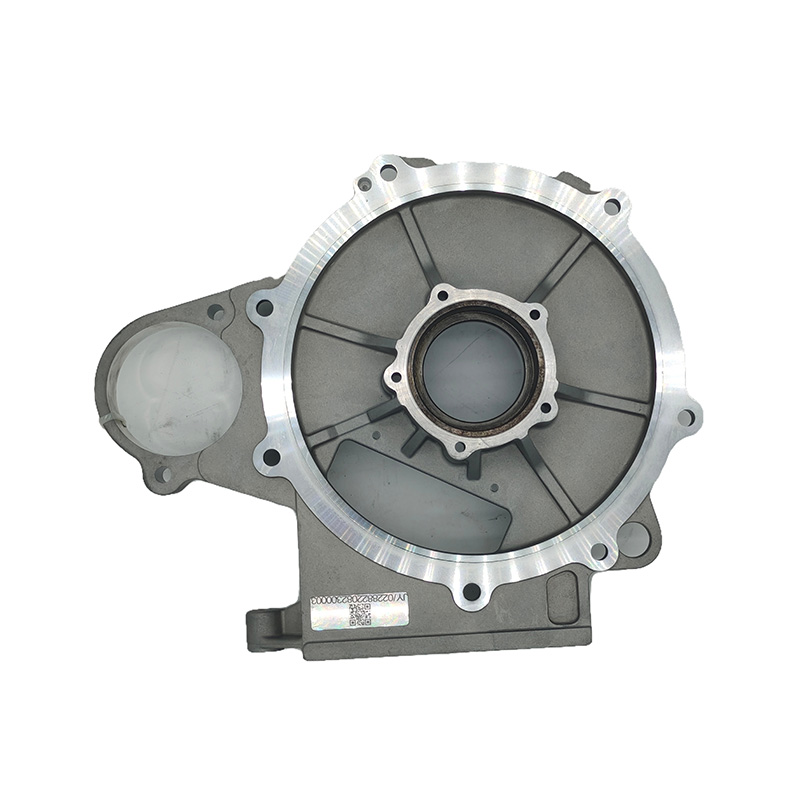
Electric drive motor housings are among the most demanding die cast components in an EV, since they must maintain tight dimensional tolerances around the stator while efficiently dissipating heat generated during operation.
Key Design Considerations
- Integrated cooling channels: Many motor housings now incorporate internal liquid cooling passages cast directly into the housing wall, eliminating the need for separate cooling jackets.
- Concentricity tolerance: The bore that houses the rotor typically requires tolerances within 0.02 to 0.05 mm to maintain the precise air gap needed for motor efficiency.
- Thin-wall casting capability: Reducing housing wall thickness improves thermal transfer and reduces weight, but requires advanced die design and precise process control to avoid porosity.
A356 aluminum alloy, often heat-treated after casting, is commonly used for motor housings due to its strong balance of thermal conductivity and mechanical strength under continuous vibration and thermal cycling.
Battery Enclosures and Trays
Battery pack enclosures represent one of the largest and most structurally critical die cast components in an EV, since they must protect cells from impact while managing thermal loads and, in many designs, contributing to overall vehicle structural rigidity.
Structural Battery Pack Integration
A growing number of EV platforms use "structural battery" or "cell-to-chassis" designs, where the battery enclosure is die cast as part of the vehicle's structural underbody rather than as a separate bolt-on unit. This approach reduces part count and overall vehicle weight but places significantly higher demands on casting quality, since the enclosure now bears crash loads in addition to housing the battery cells.
Sealing and Crash Performance Requirements
Battery enclosures must maintain a watertight seal to protect cells from moisture intrusion while also meeting crash energy absorption standards, often requiring wall thickness variation and rib patterns specifically engineered through simulation to manage impact loads without compromising the enclosure's seal integrity.
Inverter and Power Electronics Housings
Power electronics housings protect the components responsible for converting battery DC power to the AC power used by the drive motor, and they face unique design requirements not found in traditional automotive castings.
- Electromagnetic interference (EMI) shielding: The housing must block electromagnetic emissions from high-frequency switching electronics, requiring precise wall thickness and minimal gaps at seams and access panels.
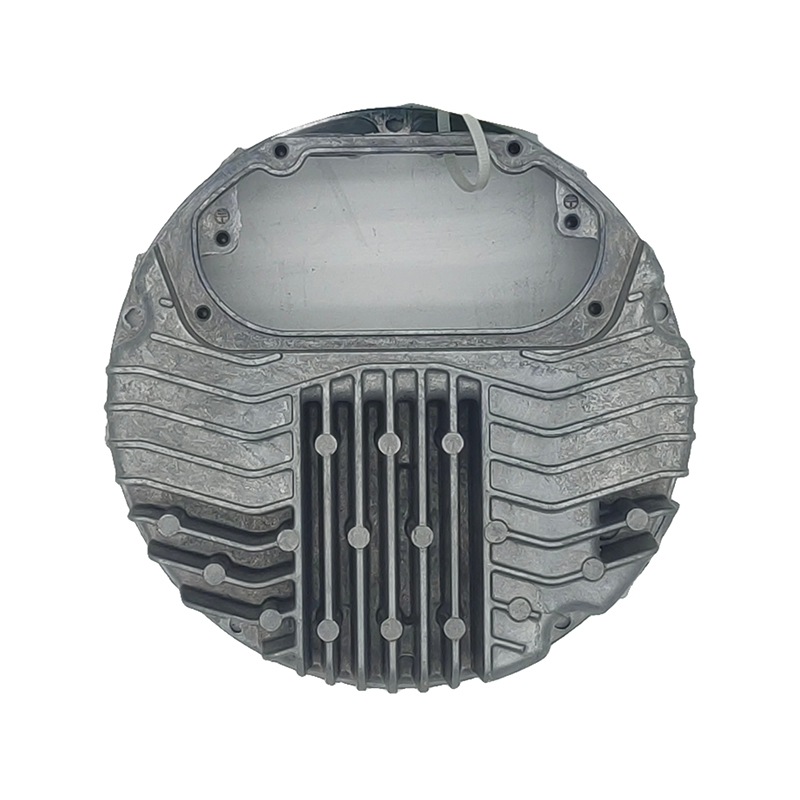
- High thermal dissipation: Power electronics generate concentrated heat loads, often requiring integrated cooling fins or liquid cooling channels cast directly into the housing design.
- Sealing against moisture and dust: Housings typically require IP67 or higher sealing ratings to protect sensitive electronics from environmental exposure throughout the vehicle's service life.
Large-Format Structural Castings (Gigacasting)
Perhaps the most visible development in new energy vehicle die casting is the rise of gigacasting, which uses massive die casting presses — some exceeding 16,000 tons of clamping force — to produce single-piece structural castings that replace what would traditionally be dozens of stamped and welded steel components.
Benefits Driving Adoption
- Significant part consolidation: A single gigacasting can replace dozens of individually stamped and welded parts, substantially reducing assembly line complexity and associated labor.
- Weight reduction: Eliminating overlapping joints, welds, and fasteners reduces overall structural weight compared to a multi-part stamped and welded assembly.
- Reduced factory footprint: Consolidating dozens of stamping and welding stations into a single casting operation can meaningfully shrink the physical assembly line and reduce capital equipment needs.
Trade-Offs to Consider
Gigacasting requires an enormous upfront tooling and press investment, and any design change during a vehicle's lifecycle requires modifying or replacing a very expensive die. Collision repair costs can also be higher, since damage to a single large structural casting may require replacing the entire section rather than repairing an individual smaller part.
Material Choices for New Energy Vehicle Components
Material selection in new energy vehicle die casting is driven heavily by the dual priorities of weight reduction and thermal performance.
- High-strength, high-ductility aluminum alloys: Newer proprietary alloy formulations developed specifically for gigacasting applications eliminate the need for post-cast heat treatment while maintaining the ductility required for crash energy absorption.
- A356/A357 aluminum: Widely used for motor housings and structural brackets requiring a balance of strength, thermal conductivity, and machinability.
- Magnesium alloys: Used selectively for weight-critical interior structural components, offering roughly one-third the density of aluminum.
Manufacturing and Quality Control Challenges
New energy vehicle components introduce quality control demands beyond those typical of traditional automotive castings, given their critical roles in safety, electrical performance, and thermal management.
- Porosity control for structural parts: Battery enclosures and large structural castings often require vacuum-assisted die casting to minimize internal porosity that could compromise crash performance.
- Leak testing: Battery enclosures and power electronics housings undergo pressure decay or helium leak testing to verify sealing performance before assembly.
- Dimensional inspection at scale: Large structural castings require coordinate measuring machine (CMM) inspection across multiple points to verify the part meets tolerance requirements across its full size.
- X-ray and CT scanning: Increasingly used on critical structural and battery-related components to detect internal defects that surface inspection cannot catch.
Selecting a Supplier for New Energy Vehicle Die Casting
Sourcing die cast components for an EV or hybrid program requires evaluating suppliers on capabilities that go beyond traditional die casting expertise. Buyers should confirm whether a supplier has experience with the specific alloy systems used in structural and thermal-critical components, in-house simulation capability to validate crash and thermal performance before tooling, and appropriate testing infrastructure such as leak testing and CT scanning for safety-critical parts. For programs involving large-format structural castings, press tonnage capacity and prior gigacasting experience become decisive factors, while for motor housings and power electronics enclosures, precision machining integration and EMI shielding validation are typically the more relevant differentiators between qualified suppliers.


 1 Building No.1 No.226. Tiantaishan Road, Daqi street. Beilun District, Ningbo City, Zhejiang Province, China
 +86-15967858563
