
 English
 Español
 Deutsch
 русский
Your customer sends a drawing for an electric drive housing. The material column reads "A380 or equivalent." It looks like a simple instruction, but that one line carries more downstream cost risk than any tolerance on the page. The alloy you choose for a high-pressure die casting affects fill behavior, porosity levels, die life, machining speeds, surface finishing, and the final mechanical properties of every part that leaves the line.
This guide gives procurement and design teams a practical frame for comparing aluminum casting alloys: what the common grades are, how they differ in measurable ways, and how a foundry's process experience should influence your final call.
Why the Alloy Choice Sets the Ceiling for Quality and Cost
Conclusion first: the alloy determines how much of your part cost is fixed before the die ever closes. A lower-priced alloy that casts poorly can double your reject rate and shorten die life. A higher-priced alloy with better fluidity or lower shrinkage can reduce secondary operations enough to pay for itself several times over.
Concretely, the alloy choice drives five outcomes:
- Fill and solidification behavior, which controls whether thin walls fill completely and where shrinkage porosity appears.
- Mechanical properties, including tensile strength, yield strength, elongation, hardness, and fatigue resistance.
- Physical properties such as thermal conductivity, electrical conductivity, and density.
- Die life, because alloy chemistry affects soldering tendency and thermal fatigue on the tool surface.
- Machinability and surface-treatment response, which determine CNC cycle time, tool wear, and whether anodizing or coating will look consistent.
Every one of those outcomes has a direct cost impact. That is why experienced buyers do not default to the cheapest alloy per kilogram; they model the total cost per good part, including scrap, machining, and tooling replacement.
The Five Aluminum Casting Alloys You Will Actually Specify
Most high-pressure die casting projects worldwide use one of five alloy families. The table below summarizes them; the notes that follow explain what the table does not say.
| Alloy | Silicon (%) | Copper (%) | Key Strengths | Typical Parts |
|---|---|---|---|---|
| A380 | 7.5–9.5 | 3.0–4.0 | Balanced strength, good castability, economical | Engine parts, housings, brackets |
| A360 | 9.0–10.0 | 0.6 max | Pressure tightness, corrosion resistance | Valve bodies, pumps, EV housings |
| ADC12 | 9.6–12.0 | 1.5–3.5 | Thin-wall fluidity, close to A383 | Automotive, electronics, communication housings |
| Al-Si11Cu3 | 10.5–12.0 | 2.0–3.5 | European spec, good wear and fluidity | Structural and powertrain castings |
| B390 | 16.0–18.0 | 4.0–5.0 | Exceptional wear resistance, low thermal expansion | Cylinder blocks, pistons |
A380: The Default Workhorse
A380 is the default choice because it hits the broadest balance of properties. In practice, it is not the strongest, not the most corrosion resistant, and not the easiest to machine, but it is the most forgiving in the die. That forgiveness translates directly into stable production, predictable scrap rates, and lower unit cost for medium-to-large volumes.
A360: Pressure Tightness and Corrosion Resistance
A360 carries more silicon and very little copper, which improves corrosion resistance and pressure tightness. The trade-off is reduced fluidity, so thin-wall designs can be more difficult to fill consistently. When a component must hold hydraulic pressure or survive a salt-spray environment, A360 is often the safer choice despite slightly higher alloy cost.
ADC12: The Asian Standard for Thin Walls
ADC12 is the most common Japanese specification and behaves much like A383 in U.S. practice. Its silicon content near the eutectic point gives excellent fluidity for thin-wall and complex-geometry parts, which is why electronics and automotive housings manufactured in Asia frequently run ADC12. If your supply base includes Chinese or Japanese die casters, ADC12 is likely their most consistent material.
Al-Si11Cu3: The European Structural Option
This family corresponds to European designations such as EN AC-46000. It overlaps with ADC12 but is usually specified with tighter composition tolerances and more demanding mechanical requirements. Buyers working to European OEM standards tend to choose Al-Si11Cu3 for safety-related or load-bearing castings where traceability and documented mechanical properties matter.
B390: The Wear-Resistant Specialist
B390 is hypereutectic: silicon content above 16 percent produces hard primary silicon particles that resist abrasive wear. That is why it is specified for cylinder bores, pistons, and other sliding surfaces. The cost is accelerated tool wear and significantly harder machining, so B390 only makes sense where the application genuinely needs its wear resistance.
Matching Casting Alloys to Real Applications
Knowing the alloy datasheet is one thing; connecting it to an actual component is where value is created. Three application clusters cover most of the parts a jobbing die caster sees.
Automotive and Powertrain
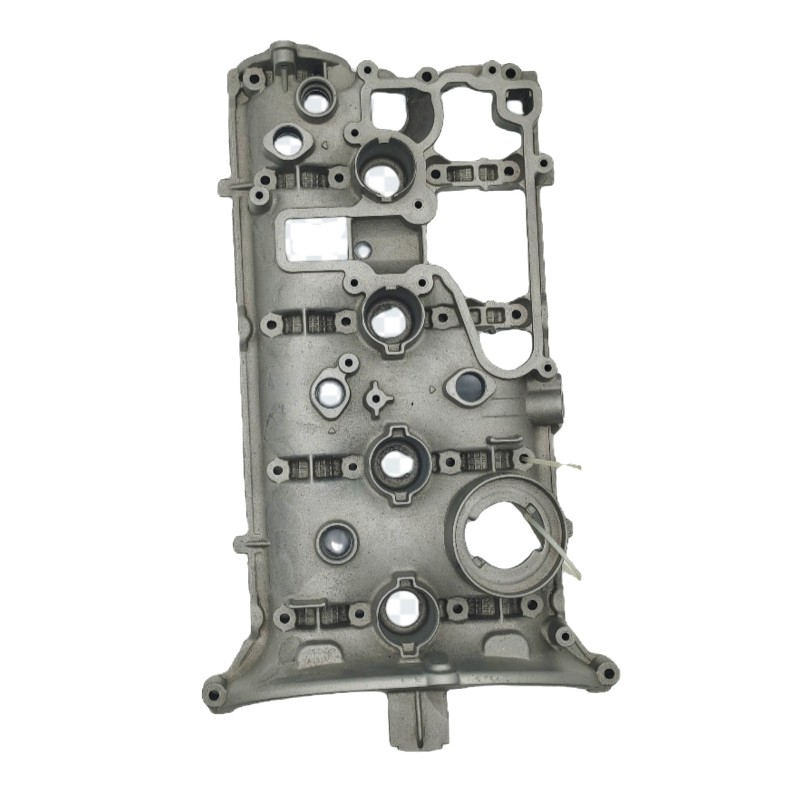
For engine systems, transmission housings, and structural mounts, A380 and ADC12 dominate because the parts need a combination of strength, heat resistance, and economical production. An oil pan, for example, must hold pressure, resist vibration fatigue, and survive under-hood temperatures; A380 provides a practical compromise. When the part is a thin-wall structural member, ADC12's fluidity becomes the deciding factor.
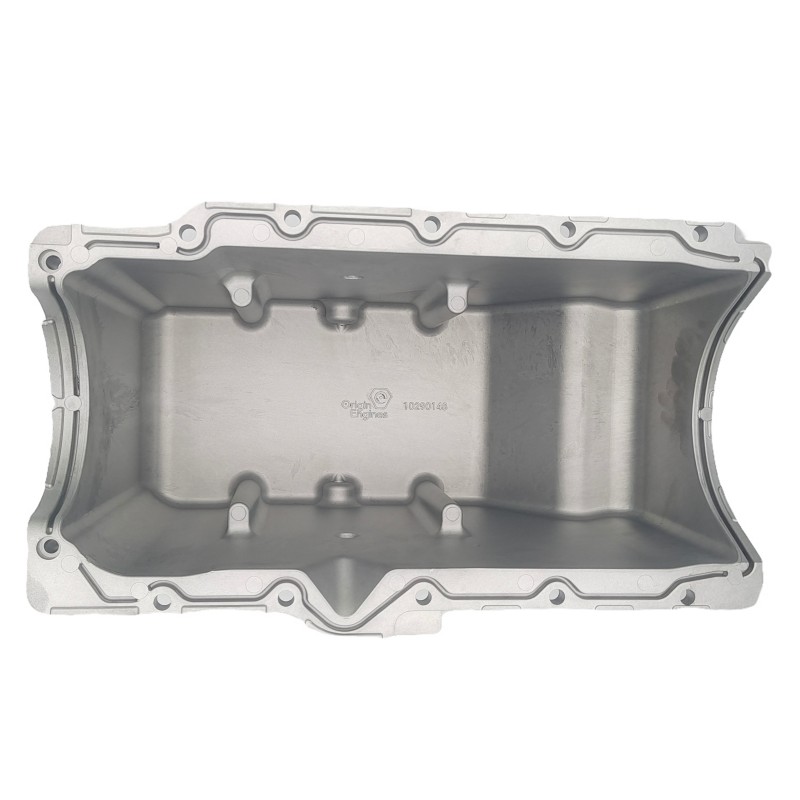 Aluminum Alloy Oil Pan Die Casting for Engine SystemsThis die-cast oil pan offers a practical balance of strength, heat resistance, and economical production for engine applications. Consider it when evaluating A380 or ADC12 for components that must hold pressure and resist vibration.View Product →
Before you approve an "or equivalent" on an engine component, ask the foundry which specific alloy they plan to run and how they will verify the chemistry on incoming material.
Electric Vehicles and Electrical Housings
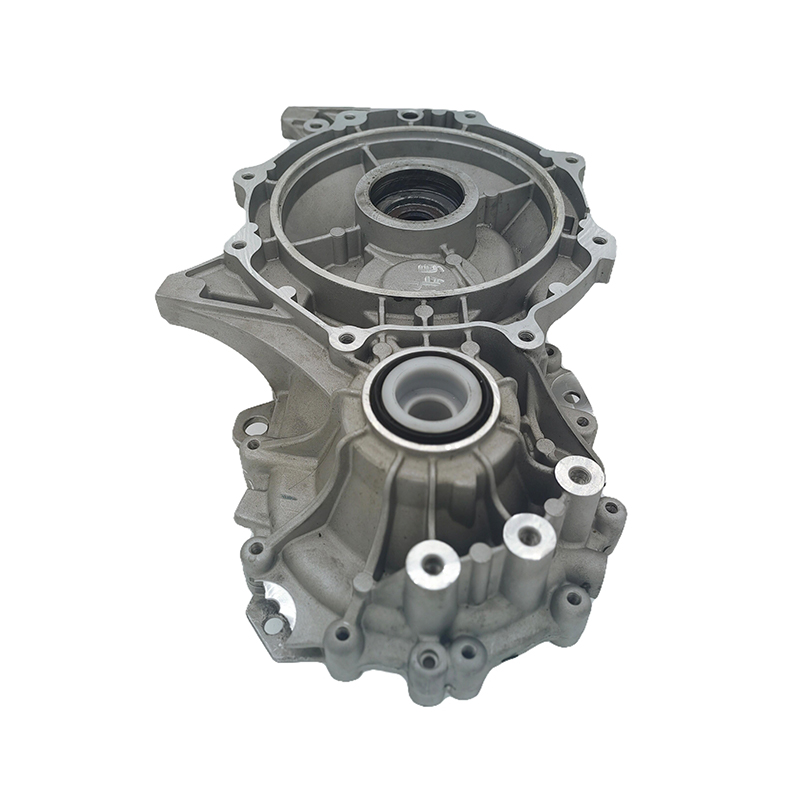
EV powertrains create a different set of demands. Electric drive housings and control units need good thermal conductivity to carry heat away from motors and inverters, plus pressure tightness to protect sensitive electronics. They are also often larger and thinner than traditional ICE components. A360, with its low copper content, provides better corrosion resistance and pressure tightness, while ADC12 and A380 remain common where thermal performance and cost must be balanced.
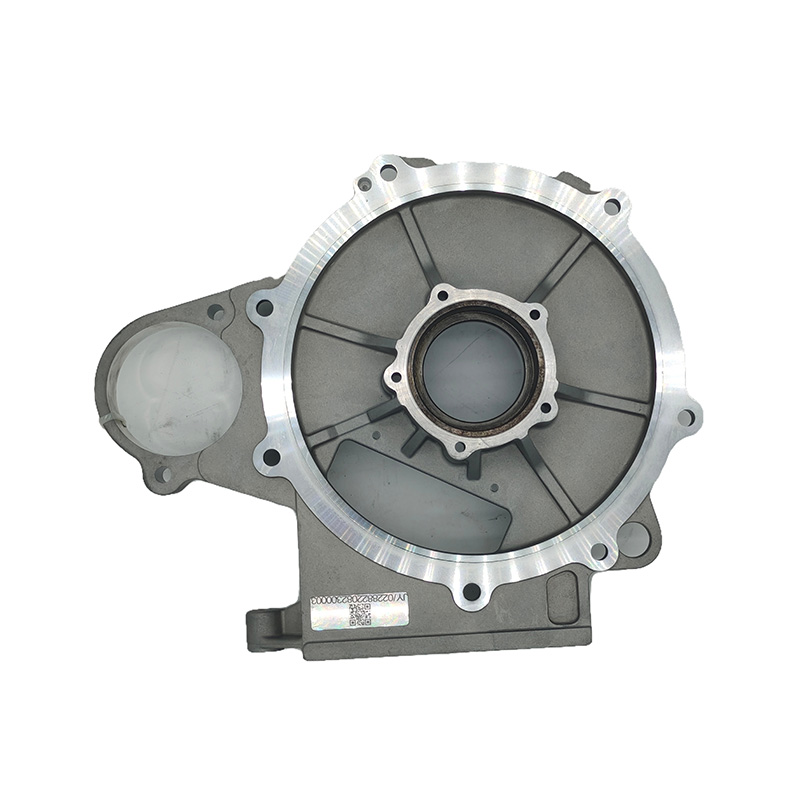 Aluminum Alloy Electric Drive System Die CastingThis high-pressure die-cast housing suits EV powertrain enclosures needing thermal conductivity, pressure tightness, and lightweight construction. It is relevant where A360, ADC12, or A380 choices affect heat management and corrosion resistance.View Product →
For a sealed EV housing, check the elongation specification carefully. Higher elongation gives better resistance to assembly stresses and thermal cycling, but it usually means sacrificing some strength or castability.
Communication and Electronics Enclosures
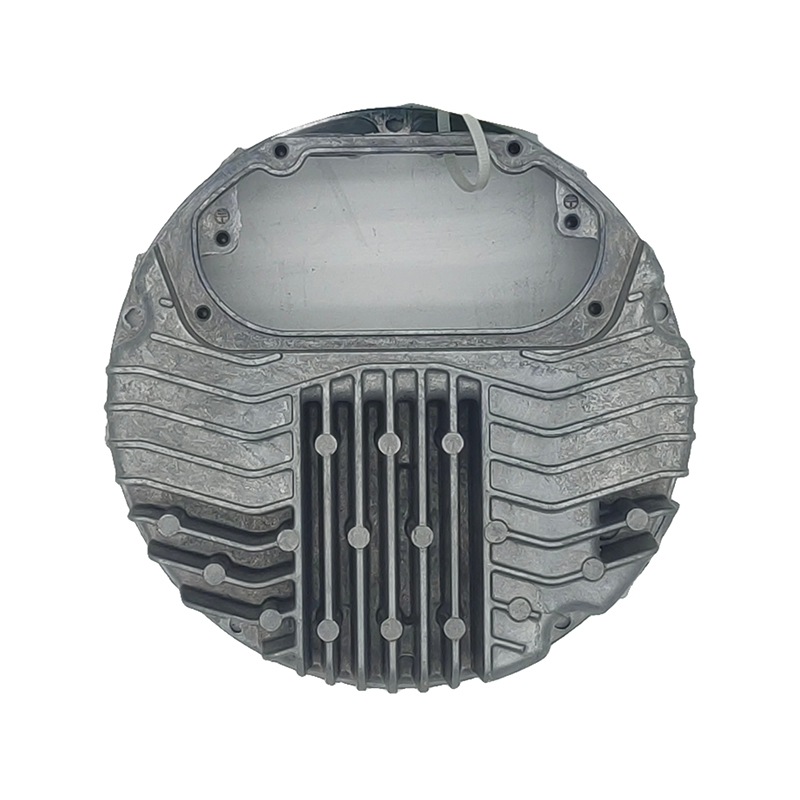
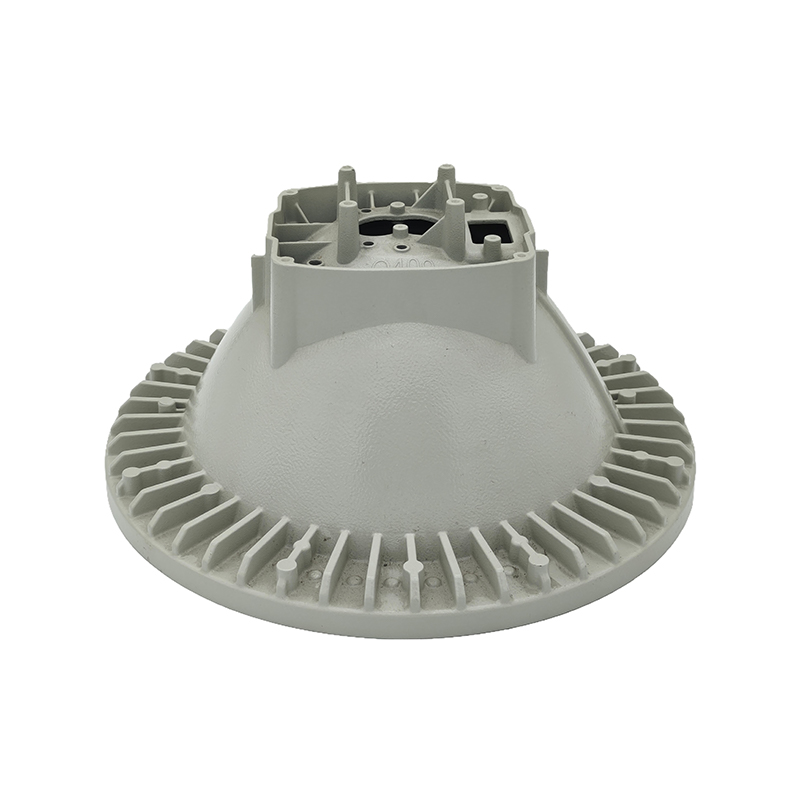
Base station housings, radar housings, and signal transmission components are increasingly specified in A380 or ADC12 with CNC finishing. These parts need dimensional stability for sealing, good EMI shielding behavior, and fine features for connectors and gaskets. Because the housings are often visible and have tight flatness requirements, the alloy choice interacts strongly with the machining strategy.
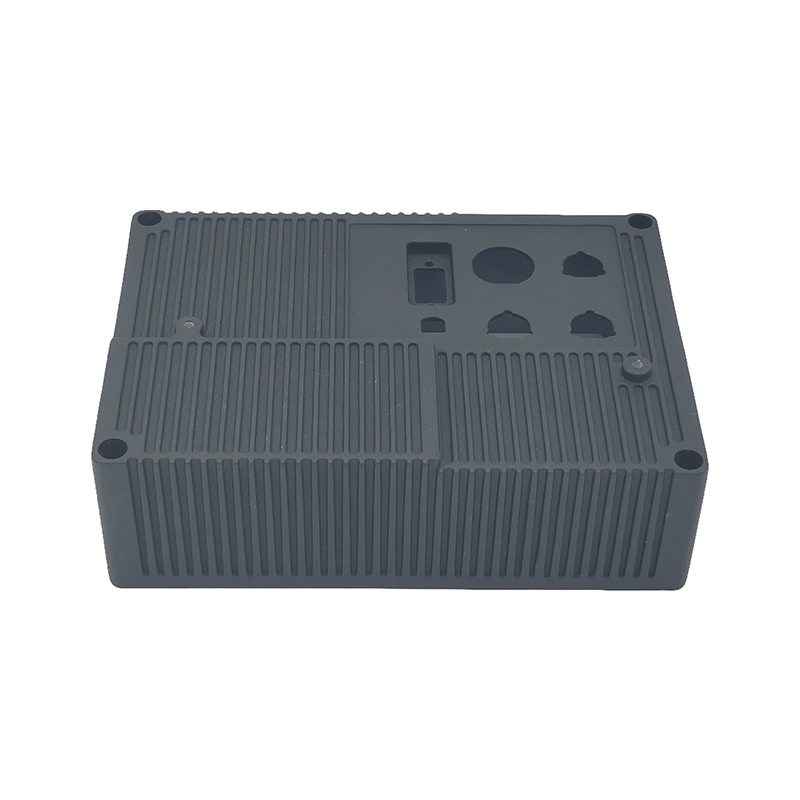 High Pressure Die Casting Aluminum Alloy Radar HousingThis radar housing is designed for outdoor communication equipment, offering structural strength, heat dissipation, and corrosion resistance. It is worth reviewing when comparing A380 or A360 for dimensional stability, EMI shielding, and finishing compatibility.View Product →
For outdoor communication equipment, also compare corrosion resistance and paint adhesion between A380 and A360. Coastal installations fail faster on standard A380 if the finishing process is not matched to the alloy.
High-Wear Components
B390 does not appear often in general housings, but when a cylinder block or compressor housing must run against a piston without a liner, its wear resistance is difficult to replace. Budget for slower cycle times and higher tooling cost. B390 is more brittle and harder to machine than A380, so plan secondary operations with that in mind.
Process Know-How Changes the Alloy Decision
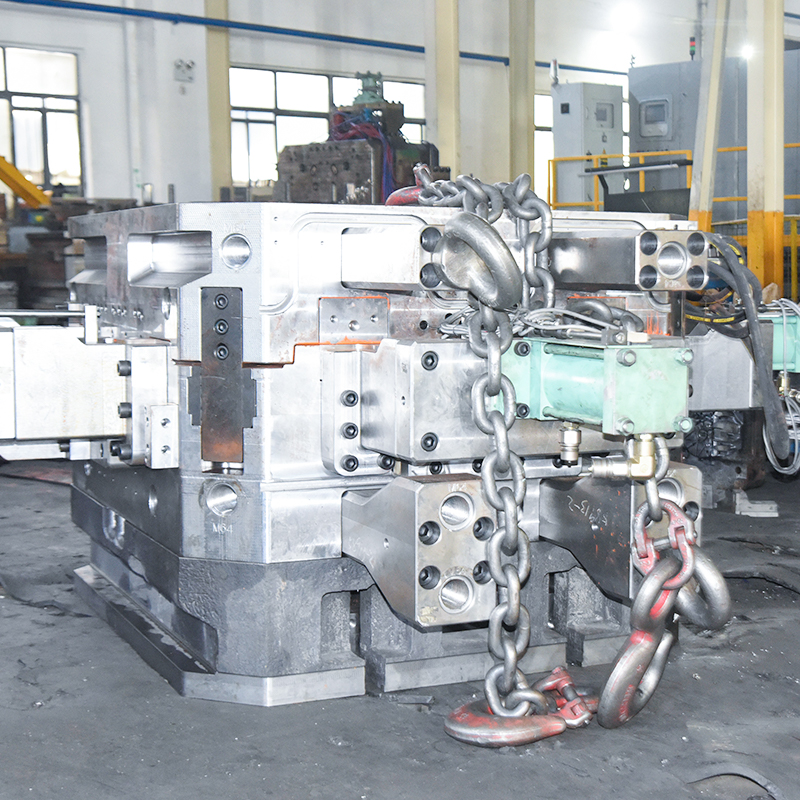
An alloy that works in one die may fail in another. Mold design, gating, cooling-line placement, and venting all determine how the alloy behaves in the cavity. A foundry that designs and cuts its own mold tooling has direct feedback between mold performance and alloy selection. When you discuss a new casting, ask how the proposed alloy will affect the die: expected die life, soldering tendency, and where porosity is most likely to appear.
Secondary operations also depend on alloy choice. The guide to post-processing techniques for die-cast parts is worth reading before you finalize the material callout, because machining speeds, surface finish, and coating compatibility vary from alloy to alloy.
Finally, be careful with "equivalent" specifications. A380 and ADC12 are similar but not identical in composition, and subtle differences in iron, zinc, or magnesium content affect elongation, pressure tightness, and how the part responds to heat treatment. If your drawing says "A380 or equivalent," ask your foundry to document the alloy number and chemical composition they intend to run, then review it against the part's functional requirements.
The best casting alloy for a project is the one that produces the required mechanical and physical properties at the lowest total cost, not the lowest alloy cost. That calculation includes die life, production yield, machining time, and reject rates. A competent die casting partner will help you model those trade-offs during the design phase rather than leaving the material decision to the last minute.
Before you send out that RFQ, write down the three or four properties that absolutely must hold: pressure tightness, thermal conductivity, elongation, hardness, or corrosion resistance. Compare alloy candidates against those requirements, then bring your foundry into the conversation early. The right alloy, paired with the right process, is what separates a casting that barely passes inspection from one that runs for years without a warranty claim.




 1 Building No.1 No.226. Tiantaishan Road, Daqi street. Beilun District, Ningbo City, Zhejiang Province, China
 +86-15967858563
