
 English
 Español
 Deutsch
 русский
Grill accessories die casting is a precise metalworking process used to manufacture high-quality components for grills, including knobs, handles, burners, side trays, and other structural parts. This process involves injecting molten metal into a pre-designed mold under high pressure, allowing manufacturers to create parts with consistent dimensions, smooth surfaces, and intricate details. The high precision and repeatability of die casting make it ideal for grill accessories, which often require exact fits and durability under extreme temperatures.
Understanding the Die Casting Process
The die casting process can be broken down into several essential steps:
1. Mold Design and Preparation
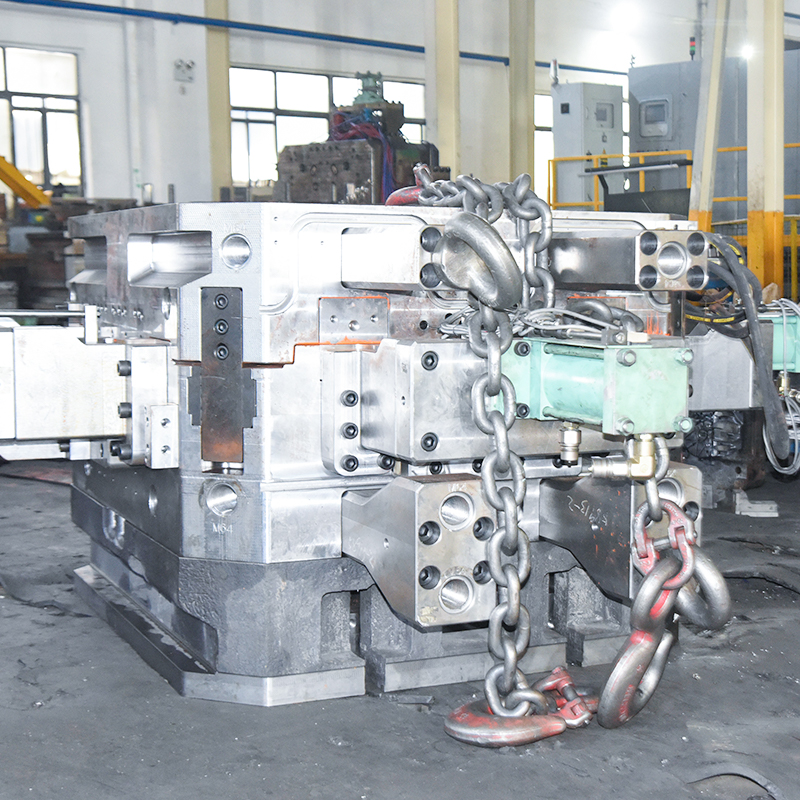
The first step involves designing the die or mold that determines the final shape of the accessory. For grill components, mold precision is critical, especially for parts like burner grids or knobs that require exact sizing to fit safely and functionally. Molds are typically made from hardened steel to withstand repeated exposure to molten metal and maintain dimensional stability over thousands of cycles.
2. Melting and Injection of Metal
Once the mold is prepared, the chosen metal—commonly aluminum, zinc, or magnesium alloys—is heated until it reaches a molten state. For aluminum die casting, the metal is heated to around 660°C and then injected into the mold under high pressure. This high-pressure injection ensures the molten metal reaches every cavity of the mold, including thin walls and intricate features. The speed and pressure also help prevent air pockets or defects in the finished component.
3. Cooling and Solidification
After the molten metal is injected, it cools and solidifies within the mold. The rapid cooling enhances the structural integrity of the component, providing excellent mechanical strength and thermal resistance. For grill accessories, this step is vital because components are exposed to direct flame and high ambient temperatures during use.
4. Ejection and Finishing
Once the metal solidifies, the mold opens, and the die-cast component is ejected. Post-processing may include trimming excess metal (flash), polishing, anodizing, powder coating, or painting to enhance corrosion resistance, aesthetic appeal, and user safety. For instance, aluminum knobs are often anodized to resist scratches, while handles may receive heat-resistant coatings.
Why Die Casting Is Ideal for Grill Accessories
Die casting provides numerous benefits that make it the preferred method for grill accessory production:
- High Precision: Tightly controlled molds ensure consistent dimensions and fit for interlocking grill parts.
- Durability: Die-cast metals withstand high heat, impacts, and outdoor conditions.
- Complex Shapes: Intricate designs such as ergonomic handles, vented burners, or threaded connectors are achievable.
- High Production Efficiency: Die casting supports mass production while maintaining uniform quality across thousands of units.
Materials Used in Grill Accessories Die Casting
The most common materials for die-cast grill components include:
- Aluminum Alloys: Lightweight, corrosion-resistant, thermally conductive, and suitable for high-heat parts.
- Zinc Alloys: Ideal for small components like knobs and latches due to excellent surface finish and strength.
- Magnesium Alloys: Lightweight, durable, and heat-resistant, often used for premium components requiring high performance.
Die Casting vs Other Manufacturing Methods
Die casting is often compared to machining, stamping, and plastic injection in terms of precision, durability, and production efficiency:
| Feature | Die Casting | Machining / Stamping | Plastic Injection |
|---|---|---|---|
| Material Options | Aluminum, Zinc, Magnesium | Metal sheets or blocks | Thermoplastics / composites |
| Precision | High, tight tolerances | Medium, limited by tool accuracy | High for plastics, but limited thermal resistance |
| Durability | Excellent, heat-resistant | Moderate, requires finishing | Lower than metals, less heat-resistant |
| Production Volume | High-volume friendly | Low to medium volume | High-volume friendly |
| Complex Shapes | Very good, intricate details achievable | Limited, complex shapes difficult | Good, but material limited by temperature |
FAQ
1. Can die casting be used for all grill components?
Die casting is ideal for metal parts such as burners, knobs, handles, and trays. Components made of rubber, silicone, or flexible plastics are usually produced by injection molding instead.
2. Why is aluminum preferred for grill die casting?
Aluminum is lightweight, thermally conductive, corrosion-resistant, and can withstand high temperatures, making it ideal for heat-exposed components like burners and side trays.
3. How long does the die casting process take per part?
The injection and cooling cycle typically takes only a few seconds to a few minutes depending on part size, making it highly efficient for mass production.
4. Can die-cast grill parts be customized?
Yes, molds can be designed to include complex shapes, ergonomic designs, and integrated features such as vent holes, threads, or decorative surfaces.
5. Are die-cast parts more expensive than machined parts?
While mold creation has an upfront cost, die casting reduces per-unit costs for high-volume production, making it more cost-effective for large-scale manufacturing.
References
- North American Die Casting Association (NADCA) – Die Casting Handbook
- Journal of Materials Processing Technology – Advances in Aluminum Die Casting
- Metal Casting Design Guide – Engineering Toolbox
- Manufacturing Today – Die Casting Innovations for Consumer Goods


 1 Building No.1 No.226. Tiantaishan Road, Daqi street. Beilun District, Ningbo City, Zhejiang Province, China
 +86-15967858563
