
 English
 Español
 Deutsch
 русский
Quick Answer: How to Choose the Right Die Casting Mould
The right die casting mould depends on three primary factors: the metal alloy you're casting, your expected production volume, and part complexity. For most general manufacturing applications, an aluminium die casting mould made from H13 tool steel is the standard choice, offering a service life of 100,000 to 300,000 shots while balancing cost and durability. If your production volume exceeds 500,000 units annually, investing in a premium mould steel like H11 or specialized alloys extends tool life significantly, even though upfront mould die design and fabrication costs increase by 20-40%.
Below, we break down the different types of die casting mould construction, walk through the full die casting mould design process, compare materials, and explain exactly how to choose the right configuration for your specific part and budget.
What Is a Die Casting Mould?
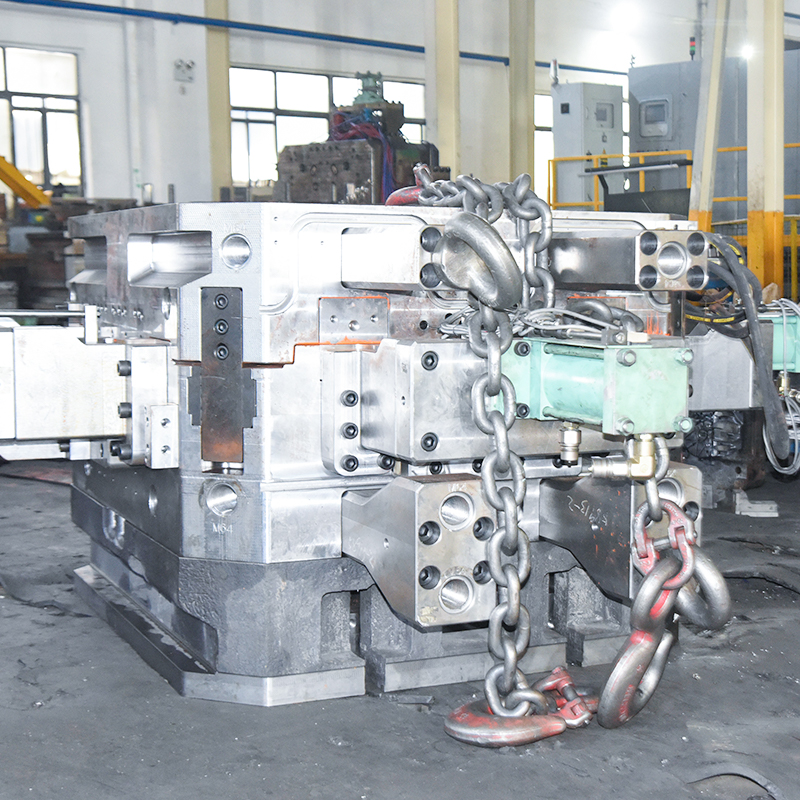
A die casting mould (also called a die casting die) is a precision-machined steel tool used in the mould die casting process, where molten metal is injected under high pressure into a cavity to form a finished part. Unlike plastic injection molds, die casting moulds must withstand extreme thermal cycling and the corrosive nature of molten metal, typically operating at temperatures between 650°C and 950°C depending on the alloy being cast.
Every die casting mould consists of two main halves—the cover die (fixed half) and the ejector die (moving half)—along with cooling channels, ejector pins, and runner systems that guide molten metal into the cavity and allow finished parts to be removed cleanly after solidification.
Types of Die Casting Moulds
Die casting moulds are categorized primarily by the casting process they support and the structural configuration of the tool itself.
Hot Chamber Die Casting Mould
Hot chamber moulds are submerged directly in the molten metal reservoir, making them suitable for low-melting-point alloys like zinc, tin, and lead. Cycle times are extremely fast, often under 15 seconds per shot, making this the preferred choice for high-volume zinc die casting applications.
Cold Chamber Die Casting Mould
Cold chamber moulds are used for higher-melting-point metals like aluminium and magnesium, where molten metal is ladled into a separate injection chamber before being forced into the mould cavity. Nearly all aluminium die casting mould applications use this configuration since aluminium's melting point of 660°C would damage hot chamber components over repeated cycles.
Single-Cavity vs Multi-Cavity Moulds
A single-cavity mould produces one part per cycle and is typically used for large or complex parts. Multi-cavity moulds produce 2 to 16+ identical parts per cycle, dramatically increasing throughput for smaller components but requiring higher upfront tooling investment and more complex mould die design.
Family Moulds
Family moulds combine multiple different part cavities within a single tool, useful for producing a set of related components (such as different sizes of the same bracket) in one casting cycle, reducing tooling costs when each individual part doesn't justify a dedicated mould.
Die Casting Mould Types Comparison Table
| Mould Type | Common Alloys | Typical Cycle Time |
|---|---|---|
| Hot chamber mould | Zinc, tin, lead | 5-15 seconds |
| Cold chamber mould | Aluminium, magnesium | 20-60 seconds |
| Single-cavity mould | Aluminium, zinc | Varies by part size |
| Multi-cavity mould | Zinc, aluminium | Same as single, higher output |
Aluminium Die Casting Mould vs Aluminium Die Casting Mold: Material Considerations
Whether spelled "mould" or "mold," an aluminium die casting mold faces unique thermal and mechanical stresses due to aluminium's relatively high melting point and tendency to be abrasive toward tool steel surfaces. Selecting the right mould steel grade is one of the most critical decisions in the entire mould die casting process.
H13 Tool Steel
H13 is the industry-standard material for aluminium die casting mould construction, offering good thermal fatigue resistance and toughness. A well-maintained H13 mould typically lasts 100,000 to 200,000 shots before requiring major refurbishment.
H11 Tool Steel
H11 offers similar properties to H13 with slightly better machinability, often chosen for complex mould die design geometries requiring intricate cavity detail.
Premium Alloy Steels
For extremely high-volume production exceeding 500,000 shots, premium alloys with enhanced heat-treatment processes can extend mould life to 300,000-500,000+ shots, justifying the 20-40% higher material and machining cost through reduced downtime and replacement frequency.
The Die Casting Mould Design Process Step by Step
A well-executed die casting mould design process directly determines part quality, cycle efficiency, and overall mould lifespan. Below is the standard sequence followed by most mould die design engineers.
- Analyze part geometry and confirm draft angles (typically 1-3 degrees minimum) to allow clean ejection.
- Determine gating and runner layout to ensure even metal flow and minimize turbulence-related defects.
- Design cooling channel placement to control solidification rate and minimize warping or porosity.
- Calculate required clamping tonnage based on projected part area and injection pressure.
- Position ejector pins to avoid visible marks on cosmetic surfaces while ensuring reliable part release.
- Run mould flow simulation software to identify potential defects before cutting steel.
- Finalize CNC machining programs and proceed to mould fabrication and heat treatment.
Key Design Elements in Die Casting Mould Construction
Gating System
The gate controls how molten metal enters the cavity. Gate velocity for aluminium typically ranges from 30 to 60 meters per second, balancing fast fill times against turbulence that can trap air and cause porosity defects.
Venting
Vents allow trapped air and gases to escape the cavity as molten metal fills it. Inadequate venting is one of the most common causes of porosity defects in finished die castings, so vent placement is a critical part of any die casting mould design review.
Cooling Channels
Properly placed cooling channels reduce cycle time by up to 20-30% compared to poorly cooled moulds, while also improving dimensional consistency by controlling shrinkage uniformly across the part.
Ejection System
Ejector pins must be strategically placed to apply force on structurally robust areas of the part, avoiding thin walls or cosmetic surfaces where pin marks would be visible on the finished product.
Cost Breakdown for Die Casting Mould Tooling
Die casting mould costs vary significantly based on part size, complexity, and cavity count. Understanding these cost drivers helps with accurate project budgeting.
| Mould Category | Cavity Count | Estimated Cost |
|---|---|---|
| Simple small part | 1-2 cavities | $5,000-$15,000 |
| Medium complexity part | 2-4 cavities | $15,000-$50,000 |
| Complex large part | 1 cavity | $50,000-$150,000 |
| High-volume multi-cavity | 8-16 cavities | $100,000-$300,000+ |
Beyond the mould itself, budget for design iteration costs (typically 10-15% of total tooling cost) and expect lead times of 8-16 weeks from design approval to first production-ready mould.
How to Choose the Right Die Casting Mould for Your Project
Use the following criteria to guide your decision when sourcing a die casting mould from a manufacturer or tooling shop.
1. Match Material to Alloy Type
Confirm whether your part requires zinc (hot chamber) or aluminium/magnesium (cold chamber) processing, as this determines the entire mould configuration from the outset.
2. Calculate Expected Production Volume
For volumes under 50,000 units annually, a standard H13 single-cavity mould is usually sufficient. For volumes exceeding 500,000 units, invest in premium steel and multi-cavity tooling to reduce per-part cost.
3. Evaluate Part Complexity
Parts with thin walls, undercuts, or tight tolerances require more sophisticated mould die design, often including sliders or lifters that add 15-30% to tooling cost.
4. Verify Supplier Experience
Request sample parts and case studies from prior aluminium die casting mold projects of similar complexity, and confirm the supplier's in-house simulation and CNC machining capabilities.
5. Plan for Maintenance and Repair
Confirm spare ejector pins, inserts, and other wear components are readily available, and ask about typical refurbishment intervals—most moulds need minor maintenance every 20,000-30,000 shots.
Common Defects Linked to Poor Mould Design
Many casting defects trace directly back to issues in the original die casting mould design rather than process parameters alone.
- Porosity caused by inadequate venting or poorly positioned gates trapping air during fill.
- Warping or dimensional inconsistency from uneven cooling channel placement.
- Flow lines and cold shuts resulting from insufficient gate velocity or poor runner design.
- Ejector pin marks on cosmetic surfaces due to poor pin placement during the design phase.
- Premature mould wear from insufficient draft angles causing excessive friction during ejection.
Maintenance Tips to Extend Die Casting Mould Lifespan
- Apply mould release agents consistently to reduce thermal shock and surface wear with each shot.
- Inspect cooling channels regularly for scale buildup, which can reduce cooling efficiency by up to 30% over time.
- Monitor ejector pin wear and replace components proactively before they cause visible part defects.
- Schedule preventive polishing of cavity surfaces every 20,000-30,000 shots to maintain surface finish quality.
- Track shot counts closely so mould refurbishment can be scheduled proactively rather than reactively after defects appear.
Frequently Asked Questions
How long does a die casting mould typically last?
A standard H13 aluminium die casting mould typically lasts 100,000 to 300,000 shots before major refurbishment is needed, though this varies based on alloy, part complexity, and maintenance practices.
What's the difference between hot chamber and cold chamber die casting moulds?
Hot chamber moulds are submerged directly in molten metal and are used for low-melting-point alloys like zinc, while cold chamber moulds use a separate ladling system and are required for higher-melting-point metals like aluminium and magnesium.
How much does a die casting mould cost?
Costs range from $5,000 for simple single-cavity tools to $300,000+ for complex multi-cavity moulds, depending on part size, complexity, and cavity count.
Why is mould die design so important in die casting?
Proper mould die design directly determines part quality, cycle time, and mould lifespan—poor design choices around venting, cooling, and gating are responsible for the majority of common casting defects like porosity and warping.
Can the same die casting mould be used for different metal alloys?
Generally no. Moulds are typically engineered for a specific alloy family due to differences in melting point, shrinkage rate, and thermal stress, so switching alloys usually requires a redesigned or separate mould die casting tool.


 1 Building No.1 No.226. Tiantaishan Road, Daqi street. Beilun District, Ningbo City, Zhejiang Province, China
 +86-15967858563
