
 English
 Español
 Deutsch
 русский
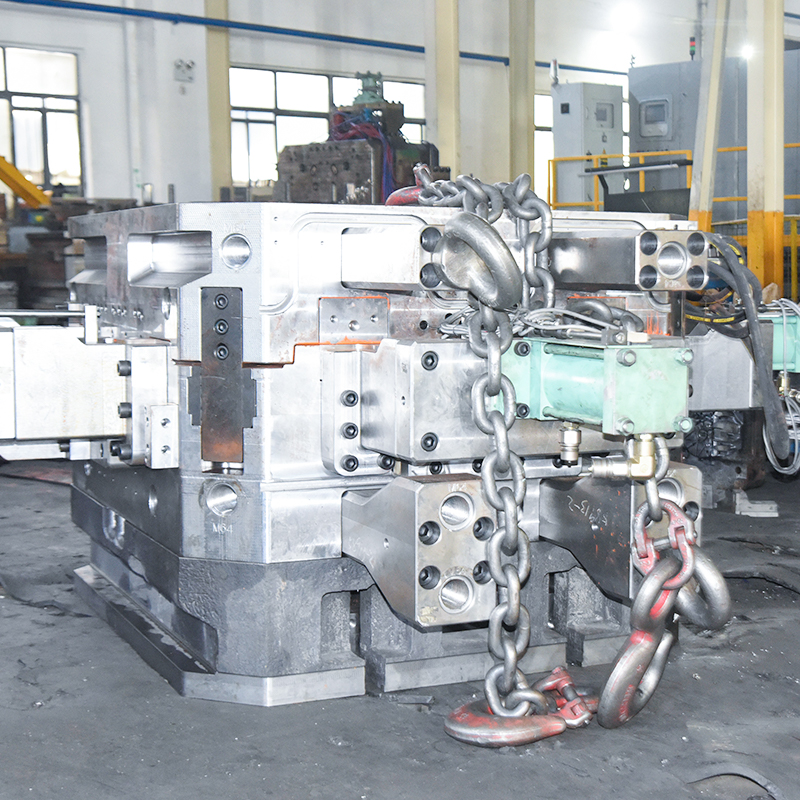
The right die casting mould depends on three core factors: tool steel material matched to your production volume, cavity design suited to your part geometry, and a cooling system capable of maintaining consistent cycle times. For most aluminum die casting runs under 50,000 cycles, H13 tool steel with a single-cavity design and conventional drilled cooling channels is sufficient. Higher-volume production or complex geometries typically require premium tool steels, multi-cavity layouts, and conformal cooling systems.
Below, we break down how to evaluate each of these three factors so your mould delivers consistent part quality across its intended production life.
Choosing the Right Mould Material
Mould material directly determines tool life, thermal performance, and resistance to the repeated thermal cycling inherent to die casting. Choosing under-spec material is one of the most common reasons moulds fail prematurely.
| Tool Steel | Typical Cycle Life | Best For |
|---|---|---|
| H13 | 50,000-100,000 cycles | Standard aluminum die casting, general production |
| H11 | 40,000-80,000 cycles | Zinc and lower-temperature alloy casting |
| DIEVAR / Premium ESR steels | 150,000-300,000+ cycles | High-volume production, complex/thin-wall parts |
Premium ESR (electro-slag remelted) steels cost roughly 20-40% more upfront than standard H13, but their extended cycle life and resistance to thermal fatigue cracking make them the better economic choice for production runs exceeding 100,000 cycles.
Matching Material to Casting Alloy
The alloy being cast also affects material choice. Zinc die casting operates at lower temperatures (around 750-800°F) and is less demanding on tool steel than aluminum casting, which runs at 1,200-1,300°F and generates significantly more thermal stress on the mould surface over repeated cycles.
Cavity Design Considerations
Cavity design affects both part quality and production efficiency. Key decisions include cavity count, gating layout, and how the part geometry influences metal flow during injection.
Single-Cavity vs. Multi-Cavity Moulds
- Single-cavity moulds: Lower tooling cost and simpler maintenance, ideal for prototyping or lower production volumes.
- Multi-cavity moulds: Can produce 2-8+ parts per cycle, significantly increasing throughput, but at a higher upfront tooling investment and more complex maintenance requirements.
A 4-cavity mould can reduce per-part cycle cost by roughly 50-60% compared to a single-cavity tool running the same total volume, making multi-cavity designs the better economic choice once production volume justifies the higher initial tooling cost.
Gating and Runner Design
Gate placement affects how molten metal fills the cavity and where defects like porosity or cold shuts are likely to occur. Proper gate sizing and placement can reduce scrap rates by 10-20% by ensuring metal flows smoothly into the cavity without trapping air or solidifying prematurely.
Draft Angles and Ejection Design
Adequate draft angles (typically 1-3 degrees minimum) are essential for releasing the cast part from the cavity without damage. Insufficient draft angle is a common cause of part sticking, surface scratches, and increased ejector pin wear over the mould's service life.
Cooling System Design
Cooling system design has a direct impact on cycle time, part quality, and overall production efficiency. Inadequate cooling extends cycle times and can cause warping, sink marks, or dimensional inconsistency in finished parts.
Conventional Drilled Cooling Channels
Standard straight-line drilled channels are the most common and cost-effective cooling method, suitable for moderately complex part geometries. They typically achieve adequate heat removal for the majority of standard die casting applications without the added cost of advanced cooling technology.
Conformal Cooling Channels
Conformal cooling channels follow the contour of the part geometry rather than running in straight lines, often manufactured using additive manufacturing (3D printing) techniques. This design can reduce cycle time by 15-30% for complex parts with deep ribs or uneven wall thickness, where conventional channels can't effectively reach all areas needing heat removal.
Cooling System Cost Tradeoffs
Conformal cooling typically adds 15-25% to overall mould cost due to specialized manufacturing requirements. This investment is generally justified for high-volume production runs where the cycle time savings compound significantly over the mould's lifetime, but may not be cost-effective for lower-volume or simpler part geometries.
How These Three Factors Work Together
Material, cavity design, and cooling system aren't independent decisions — they interact directly. A premium tool steel paired with poor cooling design won't reach its full cycle-life potential, since thermal fatigue accelerates when heat isn't removed efficiently between cycles. Similarly, a multi-cavity mould without adequate cooling capacity can actually produce slower cycle times than a well-cooled single-cavity tool.
Always evaluate these three factors together against your production volume and part complexity, rather than optimizing one in isolation, to ensure the mould performs as a cohesive system throughout its service life.
Questions to Ask Your Mould Maker
- What tool steel grade is recommended for my specific alloy and production volume?
- How many cavities make sense given my expected annual volume?
- Will conventional cooling channels be sufficient, or does my part geometry require conformal cooling?
- What is the expected cycle time and total tool life under these specifications?
Final Recommendation
For standard aluminum die casting production under 100,000 cycles, H13 tool steel with a single or dual-cavity design and conventional drilled cooling offers the best balance of cost and performance. For high-volume production or complex part geometries with deep ribs and uneven wall thickness, premium ESR tool steel paired with multi-cavity design and conformal cooling delivers significantly better cycle times and tool longevity, justifying the higher upfront investment.
Work closely with your mould maker to evaluate all three factors together against your actual production volume — this integrated approach consistently produces better long-term results than optimizing any single specification in isolation.


 1 Building No.1 No.226. Tiantaishan Road, Daqi street. Beilun District, Ningbo City, Zhejiang Province, China
 +86-15967858563
