
 English
 Español
 Deutsch
 русский
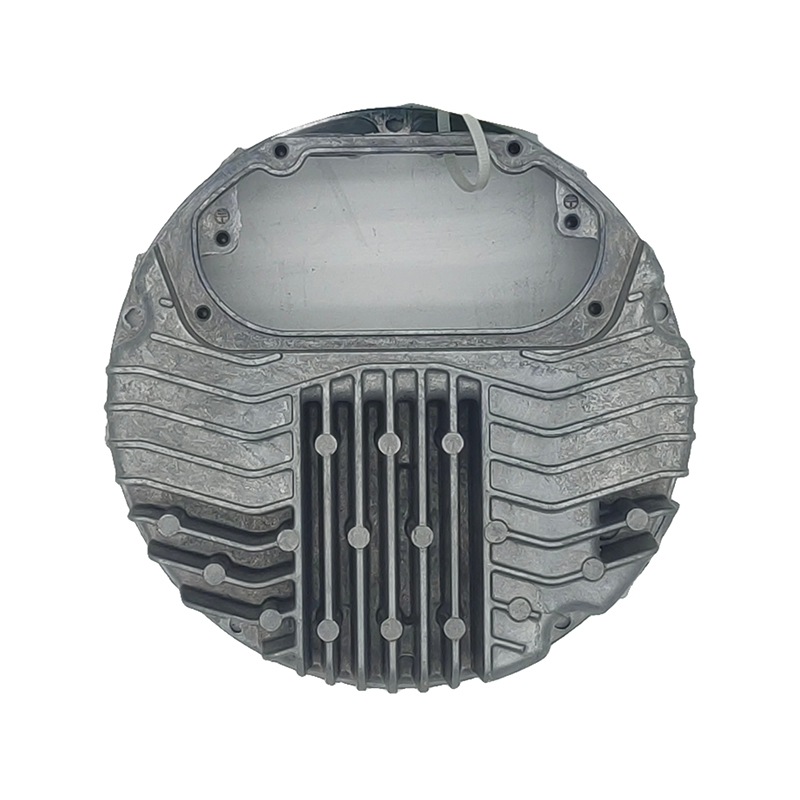
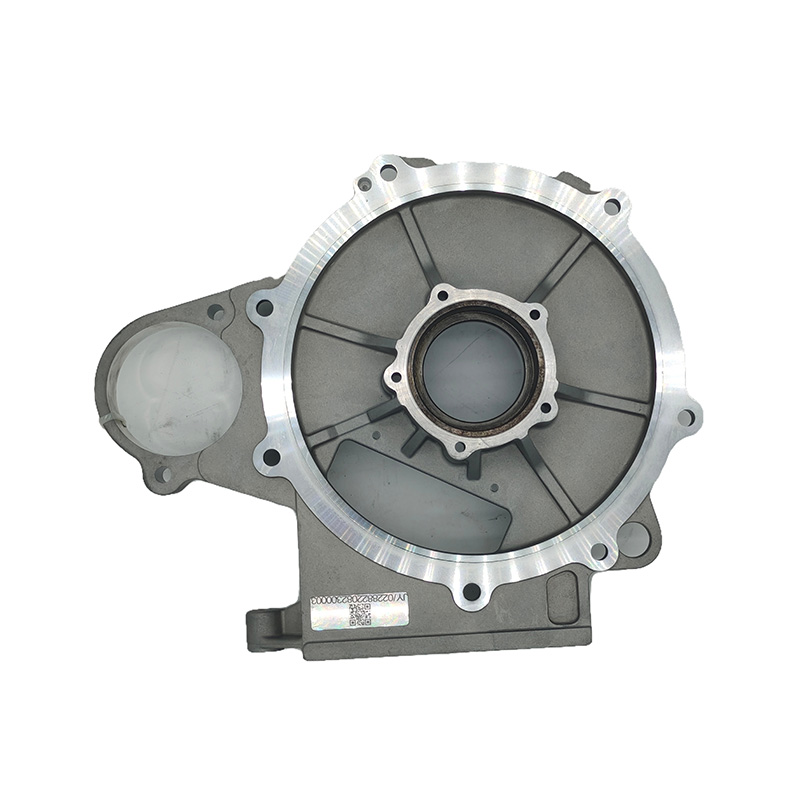
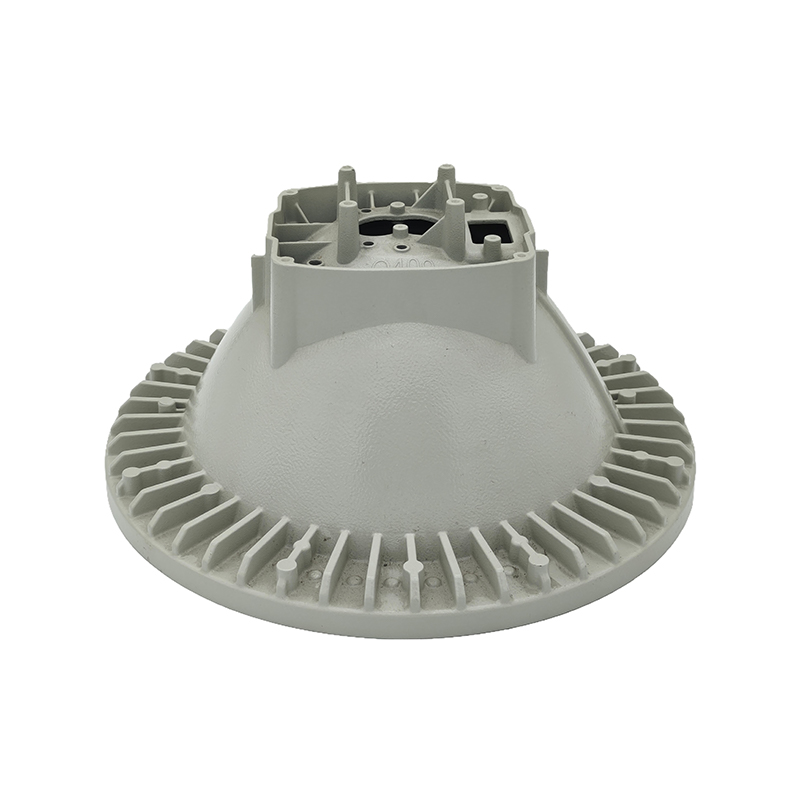
In the competitive marine propulsion market, the demand for high-performance, lightweight engines has pushed the boundaries of Outboard Motor Die Castings. Specifically, the manufacturing of thin-walled housing components—with wall thicknesses typically below 2.0mm—represents the pinnacle of die-casting complexity. Achieving this reduction in weight while maintaining structural integrity in a harsh saltwater environment presents several formidable technical hurdles.
1. Flow Dynamics and Rapid Solidification: The Filling Limit
Producing thin-walled Outboard Motor Die Castings is essential for reducing overall engine weight and improving the power-to-weight ratio. However, thin-walled manufacturing places nearly impossible demands on fluid dynamics control during the casting process.
1.1 Managing High Surface-to-Volume Ratios
Thin-walled parts have an extremely high surface-to-volume ratio, which means the molten aluminum alloy loses heat almost instantly upon contact with the die surface. If the metal flow is not fast enough, it will begin to solidify before completely filling the mold cavity, resulting in “cold shut” defects. To overcome this, premier suppliers must utilize advanced High-Pressure Die Casting (HPDC) technology. By increasing injection speeds to over 50 meters per second, the molten metal is forced to fill the cavity within milliseconds. This process requires not only a powerful hydraulic system but also a precise data acquisition system to monitor pressure curves in real-time, ensuring every thin-walled section is perfectly filled.
1.2 Optimized Gating and Overflow System Design
In thin-wall casting, the design of the gating system is the deciding factor for success. Engineers must use professional Mold Flow Simulation software to predict the flow front of the molten metal. For complex outboard motor covers or brackets, multi-point gating systems are often required to maintain a uniform temperature gradient throughout the cavity. Furthermore, the design of the overflow wells is critical; they must precisely vent cold metal and air from the mold. This level of detail distinguishes a professional outboard parts supplier from a general die-casting plant.
2. Porosity Management and Structural Soundness: Safety in Tight Spaces
While thin-wall designs effectively reduce weight, they significantly shrink the margin for error. For an Outboard Motor Die Casting that serves as a core structural support, even a micron-level internal defect can evolve into a catastrophic failure under long-term, high-frequency vibration in marine conditions.
2.1 Micro-Control of Gas and Shrinkage Porosity
During high-speed injection, air is easily trapped in the melt to form gas porosity; meanwhile, because thin sections solidify faster than thicker bosses or ribs, shrinkage porosity is a constant risk. To excel in the 2026 market, leading manufacturers widely adopt Vacuum-Assisted Die Casting. By extracting air from the mold cavity prior to injection, the risk of trapped gas is drastically reduced. This process produces castings with extremely high internal density, which can even undergo subsequent Heat Treatment to further enhance mechanical strength and impact resistance.
2.2 Prevention of Thermal Stress and Warpage
Thin-walled components are highly sensitive to thermal stress during the cooling phase. Uneven cooling can easily cause parts to warp or distort, which is fatal for outboard motor housings that require precision assembly with gaskets. To control deformation, engineers must design intricate Conformal Cooling channels within the die. By accurately balancing the temperature across different parts of the mold and utilizing professional spray lubrication, the part remains dimensionally stable upon ejection. This pursuit of “Dimensional Stability” is a key technical pillar for improving search rankings in high-performance marine parts.
3. Material Selection and Corrosion Resistance: The Foundation of Longevity
Outboard motors are constantly exposed to highly corrosive salt-spray environments, meaning Outboard Motor Die Castings must be both lightweight and exceptionally durable. The choice of alloy dictates the service life of the component.
3.1 Application of High-Fluidity Marine-Grade Alloys
While traditional A380 aluminum is widely used, its fluidity is often insufficient for ultra-thin walls. Consequently, the industry is shifting toward alloys with higher silicon content and better corrosion resistance, such as A360 or Silafont-36. These alloys behave like water in a molten state, possessing excellent filling capabilities and forming a dense protective oxide layer after solidification. However, these high-performance alloys are more abrasive to the die, requiring specialized nitriding or surface coatings on the mold to extend tool life and maintain surface finish.
3.2 Synergy of Multi-Stage Surface Treatments
Even with high-quality alloys, post-casting surface treatments are indispensable. Thin-walled die castings often undergo a series of processes including Anodizing, E-coating (Electrophoretic Deposition), and Powder Coating. The technical challenge lies in ensuring uniform adhesion and salt-spray resistance without compromising the dimensional accuracy of the thin-walled substrate. In Semrush trends, “Salt spray test 1000 hours” is a vital technical parameter for international buyers; showcasing these results can significantly increase inquiry conversion rates.
4. Technical Comparison: Thin-Wall vs. Standard Wall Casting
| Metric | Thin-Walled Housing (< 2.0mm) | Standard Housing (> 3.5mm) |
|---|---|---|
| Injection Speed | Very High (Requires Advanced HPDC) | Moderate (Standard Equipment) |
| Vacuum System | Mandatory (Ensures Zero Porosity) | Optional |
| Material Fluidity | Extreme (A360 / Silafont-36) | General (A380 / ADC12) |
| Cooling Complexity | Extreme (Conformal Cooling) | Standard (Traditional Water Lines) |
| Primary Failure Risk | Cold Shuts, Warpage | Shrinkage, Porosity |
| Weight Efficiency | Maximum (Critical for Fuel Economy) | Standard |
5. FAQ: Technical Sourcing for Outboard Die Castings
Q1: Does thin-wall design reduce the lifespan of an outboard motor?
On the contrary. By using vacuum-assisted casting and high-performance marine-grade alloys, the internal density of thin-walled parts is often higher than that of thicker, conventional castings. Combined with advanced NDT (Non-Destructive Testing) like X-ray scanning, we ensure these parts offer superior fatigue life despite their lighter weight.
Q2: How do you solve sealing issues in thin-walled assemblies?
For thin-walled housings, we utilize precision CNC machining to ensure the flatness of mating surfaces. We also apply Impregnation processes to fill any microscopic pores, ensuring the components remain 100% airtight and watertight during long-term underwater operation.
Q3: Is the tooling cost higher for thin-walled die castings?
Yes. Due to the need for precise thermal balance design, complex vacuum venting, and higher-strength mold steel, the initial investment is typically 20%-30% higher than standard molds. However, the ROI in terms of engine performance and fuel economy makes this investment highly valuable.
6. References and Industry Standards
- NADCA (North American Die Casting Association) - High-Pressure Die Casting Design Guide, 2025.
- ISO 12215: Hull construction and scantlings for marine propulsion systems.
- ASTM B85/B85M - Standard Specification for Aluminum-Alloy Die Castings.
- Journal of Marine Materials: Evaluation of Corrosion Resistance in Saltwater Environments.


 1 Building No.1 No.226. Tiantaishan Road, Daqi street. Beilun District, Ningbo City, Zhejiang Province, China
 +86-15967858563
