
 English
 Español
 Deutsch
 русский
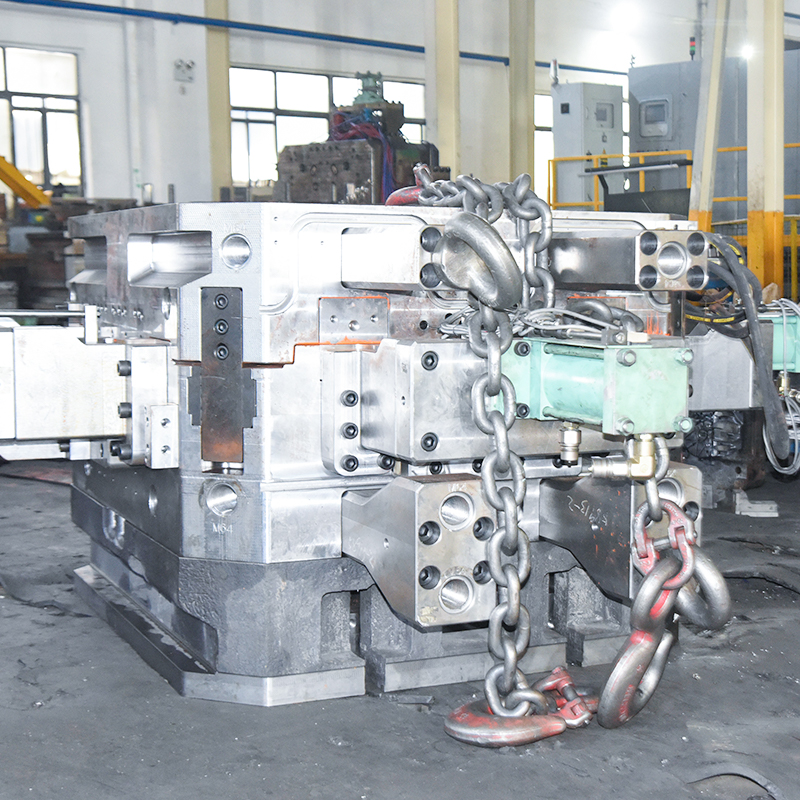
For a new die casting mould, tooling costs typically range from $5,000 for a simple single-cavity zinc mould to over $200,000 for a complex multi-cavity aluminum structural tool, and lead times run from 4 weeks to 20 weeks depending on complexity, steel specification, and supplier location. These numbers are not arbitrary — they are driven by five quantifiable factors: part size, geometric complexity, number of cavities, steel grade, and required surface finish. Understanding how each factor contributes lets you build a defensible cost estimate before a single RFQ is issued.
The Five Primary Cost Drivers for a Die Casting Mould
Every line item in a die casting mould quotation traces back to one or more of these five variables. Controlling them during part design is the most effective way to manage tooling budget.
1. Part Size and Mould Base Dimensions
Mould cost scales roughly with the cube of the mould base dimensions — doubling the part footprint can triple the steel cost alone. A mould base for a 150 × 200 mm part might cost $1,500–3,000 in raw steel, while a base for a 500 × 600 mm part costs $12,000–25,000. Larger moulds also require larger, more expensive machining centers and longer machine time.
2. Geometric Complexity and Number of Slides
Each side core or hydraulic slide mechanism adds $3,000–15,000 to tooling cost and 1–3 weeks to lead time. A part with two slides costs significantly more than one with none — not just for the slide hardware, but for the additional mould engineering, wear inserts, and fitting time required. Lifters for internal undercuts add similar cost increments.
3. Number of Cavities
Multi-cavity moulds do not cost proportionally more than single-cavity tools — a 4-cavity mould typically costs 2.2–2.8× a single-cavity mould, not 4×. However, they require a balanced runner system, matched cavity dimensions, and more rigorous sampling and balancing time. The crossover point where multi-cavity tooling investment is justified is usually around 500,000+ annual parts.
4. Steel Grade and Heat Treatment
Die steel selection has a direct and significant impact on both cost and lead time. H13 tool steel (the most common choice for aluminum die casting) requires vacuum heat treatment to 44–48 HRC — a process that adds $2,000–8,000 and 1–2 weeks to the schedule. Premium grades such as DIN 1.2367 or Dievar for high-volume or high-temperature applications cost 30–50% more than standard H13 but deliver 40–80% longer mould life.
5. Surface Finish and Texture Requirements
A standard EDM finish (Ra 0.8–1.6 µm) is included in most mould quotes. Polishing to SPI A1/A2 mirror finish for cosmetic parts adds $1,500–6,000 per cavity. Laser-etched or chemical-textured surfaces (VDI 30–45) add $800–3,000 depending on texture area. These costs are easy to overlook in early budgeting and frequently cause quote variances of 10–20%.
Tooling Cost Reference by Part Category
The table below provides realistic budget ranges for common die casting mould types. These figures reflect single-cavity production tooling quoted from competent toolmakers in China, Southeast Asia, and Europe/North America respectively.
| Part Type | Alloy | Complexity | China / SEA Cost | Europe / N. America Cost | Lead Time |
|---|---|---|---|---|---|
| Small connector / housing (<50g) | Zinc | Low | $5,000–12,000 | $18,000–35,000 | 4–7 weeks |
| Heat sink / cover (100–500g) | Aluminum | Low–Medium | $15,000–35,000 | $45,000–90,000 | 6–10 weeks |
| Gearbox / pump housing (0.5–3kg) | Aluminum | Medium–High | $40,000–90,000 | $100,000–200,000 | 10–16 weeks |
| Automotive structural bracket (2–8kg) | Aluminum | High | $70,000–150,000 | $180,000–380,000 | 14–20 weeks |
| Multi-cavity small part (4–8 cavities) | Zinc / Al | Medium | $25,000–65,000 | $70,000–160,000 | 8–14 weeks |
How to Build a Bottom-Up Cost Estimate
A bottom-up estimate breaks the mould into its cost components and prices each separately. This approach is more accurate than top-down benchmarking and reveals which elements offer cost reduction opportunities.
Component Breakdown for a Typical Aluminum Die Casting Mould
| Cost Component | Typical % of Total Cost | Example (Medium Complexity Mould) |
|---|---|---|
| Mould base steel (standard P20 or H13) | 10–18% | $6,000–12,000 |
| Cavity and core insert steel (H13) | 12–20% | $8,000–15,000 |
| CNC machining (roughing + finishing) | 25–35% | $15,000–25,000 |
| EDM (wire and sinker) | 8–15% | $5,000–10,000 |
| Heat treatment (vacuum hardening) | 4–8% | $2,500–5,500 |
| Slides, lifters, and hardware | 8–18% | $5,000–13,000 |
| Cooling system (drilling + fittings) | 3–6% | $2,000–4,500 |
| Assembly, fitting, and bench work | 6–12% | $4,000–9,000 |
| Trial shots, sampling, and corrections | 5–10% | $3,000–7,000 |
Lead Time Breakdown: Where the Weeks Go
Lead time is not simply machining time — it is the sum of several sequential and sometimes parallel activities. Understanding this breakdown helps identify where schedule compression is feasible and where it is not.
| Phase | Activities | Simple Mould | Complex Mould |
|---|---|---|---|
| Mould design and DFM review | 3D design, flow simulation, customer approval | 1–2 weeks | 3–5 weeks |
| Steel procurement | Order, certify, and receive mould steel | 1–2 weeks | 2–4 weeks |
| Rough machining | Mould base and insert rough cuts | 1 week | 2–3 weeks |
| Heat treatment | Vacuum hardening of H13 inserts | 1 week | 1–2 weeks |
| Finish machining and EDM | Final cavity profiles, gating, venting | 1–2 weeks | 3–5 weeks |
| Assembly and fitting | Bench fitting, slides, ejector system | 0.5–1 week | 1–2 weeks |
| T1 trial and corrections | First shots, dimensional check, mould tuning | 0.5–1 week | 2–4 weeks |
China vs. Europe vs. North America: What You Get at Each Price Point
The 3–5× price difference between tooling sourced from China and tooling from Western Europe or North America is real — but so are the differences in what that price buys. The decision is not simply about unit cost.
- China / Southeast Asia ($5,000–150,000 range): Competitive for medium-complexity tools with well-defined 3D data. Lead times are similar to Western suppliers for straightforward designs. Key risks include inconsistent steel certification practices, limited DFM feedback during design, and communication delays adding 1–3 weeks to iteration cycles. Best suited for high-volume, cost-sensitive programs where the buyer has in-house tooling engineering capability to manage the supplier.
- Europe ($35,000–380,000 range): German, Portuguese, and Czech toolmakers offer high precision and rigorous documentation — essential for automotive IATF 16949-regulated programs. Mould designs typically include full FMEA documentation, material traceability to EN 10204 3.1, and dimensional reports. Lead times are comparable to or slightly longer than Chinese suppliers for complex tools.
- North America ($40,000–400,000 range): Fastest iteration cycles for design changes — a correction that takes 3 weeks with an overseas supplier may take 5 days domestically. Critical for programs with compressed timelines or frequent engineering changes during development. Also eliminates intellectual property risk concerns relevant in some industries.
A common hybrid strategy is to build the production tool in China but conduct T1 and T2 trials locally using a domestic bridge tool or soft-tool prototype, compressing the overall program timeline while controlling cost.
Hidden Costs That Are Frequently Missing from Initial Quotes
Die casting mould quotes from toolmakers — especially overseas suppliers — often exclude items that are either assumed to be the buyer's responsibility or simply overlooked. These omissions consistently cause budget overruns of 15–35% on first-time tooling programs.
- Flow simulation and DFM analysis: If not included in the quote, budget $2,000–8,000 separately. Skipping simulation to save money is the most reliably expensive decision in tooling procurement.
- T2 and T3 trial shots: Most quotes include one trial run. Parts with tight tolerances or complex flow paths routinely require 2–4 trial iterations before approval. Each additional trial costs $1,500–6,000 in machine time, labor, and material.
- Dimensional inspection and PPAP documentation: First Article Inspection (FAI) reports, CMM measurement, and PPAP Level 3 submission packages add $2,000–8,000 for automotive programs and are rarely included in base quotes.
- Freight and import duties: Shipping a large mould from China to North America costs $800–3,500 depending on weight, and import tariffs on steel tooling can add a further 10–25% of tooling value in some trade environments.
- Mould storage and maintenance: Long-term mould storage, preventive maintenance kits (spare ejector pins, wear inserts, springs), and re-polishing between production runs are ongoing costs that should be budgeted from program start.
- Engineering changes during development: Any part design change after mould steel is cut costs money. A simple boss addition may cost $500–2,000; relocating a gate after T1 sampling typically costs $5,000–20,000.
How Part Design Decisions Directly Control Tooling Cost
The single most effective cost reduction lever is design for manufacturability (DFM) applied before the mould RFQ is issued. Design decisions that appear minor on a part drawing can add tens of thousands of dollars to tooling cost.
- Undercuts requiring slides: Each undercut that cannot be released by draft alone requires a slide mechanism. Redesigning a single undercut to be draft-releasable saves $4,000–12,000 per slide eliminated.
- Insufficient draft angles: Zero-draft or negative-draft surfaces require EDM spark erosion finishing and additional polishing — adding $1,000–4,000 and 3–7 days per affected surface. A minimum 1.5° draft on all die-draw faces eliminates this cost entirely.
- Tight tolerances on non-critical features: Specifying ±0.05 mm on a feature that functions at ±0.2 mm forces the toolmaker to use slower, more expensive finishing operations. Audit every tolerance on the drawing and loosen non-functional ones to ±0.1–0.2 mm where possible.
- Inconsistent wall thickness: Large variations in wall thickness (e.g., 1.5 mm walls connecting to 8 mm bosses) require complex cooling channel design and longer cycle times — both of which increase mould cost and piece price. Targeting a uniform wall thickness of 2–3 mm for aluminum die casting simplifies tooling significantly.
- Cosmetic surface requirements on all faces: Specifying high cosmetic finish on surfaces that will be hidden in assembly forces polishing of areas that could be left at standard EDM finish. Clearly mark non-cosmetic surfaces on the drawing to avoid unnecessary finishing cost.
Checklist: What to Provide in an RFQ to Get Accurate Quotes
Inaccurate or incomplete RFQ packages are the leading cause of quote variances exceeding 30% between suppliers. Providing complete information upfront produces comparable, accurate quotes and prevents expensive surprises after purchase order issuance.
- 3D part model (STEP or IGES format) — not just a 2D drawing. Toolmakers cannot quote accurately from 2D alone for complex parts.
- 2D drawing with GD&T, critical dimensions, and surface finish callouts — specifying which surfaces are cosmetic, functional, and non-critical.
- Annual volume and total program life — determines number of cavities and required mould life (e.g., 500,000 shots vs. 2,000,000 shots requires different steel grades).
- Alloy specification — A380, ADC12, Zamak 3, etc. Different alloys have different die temperature requirements and steel demands.
- Target cycle time — if cycle time is constrained, state it. Faster cycle time requires more sophisticated cooling channel design, which adds cost.
- Machine tonnage and tie-bar spacing of the production press, if known — the mould must fit the machine.
- Required documentation package — PPAP level, material certifications, dimensional report format, and any customer-specific mould standards (e.g., AIAG, VDA, or OEM-specific mould standards).
- Tooling ownership and storage terms — clarify where the mould will be stored, who owns it, and what maintenance responsibilities apply to the toolmaker.


 1 Building No.1 No.226. Tiantaishan Road, Daqi street. Beilun District, Ningbo City, Zhejiang Province, China
 +86-15967858563
